
The Truth Behind the Alcatraz Myth: How Movies and Media Shaped Its Legacy
Alcatraz Island already feels familiar to most people before they ever visit. It exists in memory through movies, documentaries, and stories long before it becomes a real place.
That version is usually the same: a dark, inescapable prison surrounded by freezing water, filled with dangerous inmates and constant tension.
It’s also the version many visitors carry with them when they start planning an Alcatraz day tour or an Alcatraz night tour.
But the moment you step onto the island, that expectation starts to shift.
What Alcatraz Really Was

Alcatraz Federal Penitentiary operated from 1934 to 1963 as a federal prison with a very specific role. It was not designed for the average inmate, but for those who had already caused problems in other institutions.
That meant stricter control, not necessarily harsher conditions.
The prison held a relatively small population, usually around 260 inmates. This allowed for tighter supervision, fewer disturbances, and a more structured daily routine.
Cells were small, about 5 by 9 feet, but standard for the time. Inmates received regular meals, access to medical care, and the ability to earn privileges such as reading and recreation.
Most people begin to notice this gap between expectation and reality during a daytime visit. In clear light, the layout feels less dramatic and more functional. The prison looks controlled, not chaotic.
How Hollywood Built the Alcatraz Myth
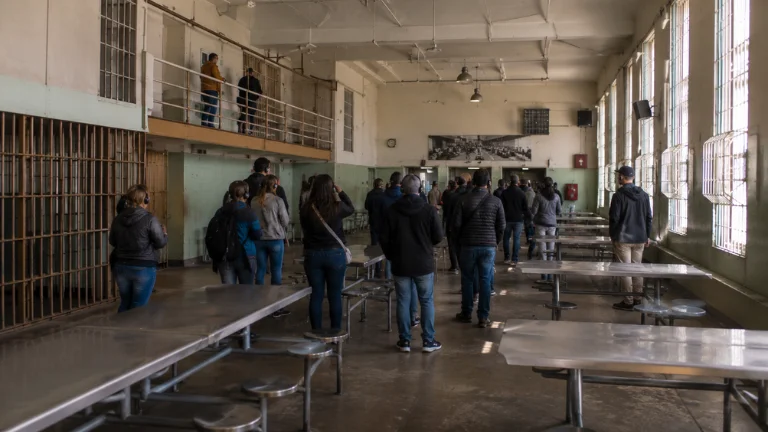
The image of Alcatraz most people recognize today was shaped largely by film.
When Reality Became Atmosphere
Movies like Escape from Alcatraz turned real events into tightly focused stories about isolation and escape. It emphasized silence, shadows, and tension.
The Rock pushed that even further, transforming the prison into a high-security action setting.
These portrayals established a visual language:
Dark corridors
Heavy shadows
Constant tension
Interestingly, this is similar to what many visitors expect from a night visit. The lighting, the quieter environment, and the reduced crowd naturally make the experience feel more intense, closer to the cinematic version.
The “Inescapable Prison” Narrative
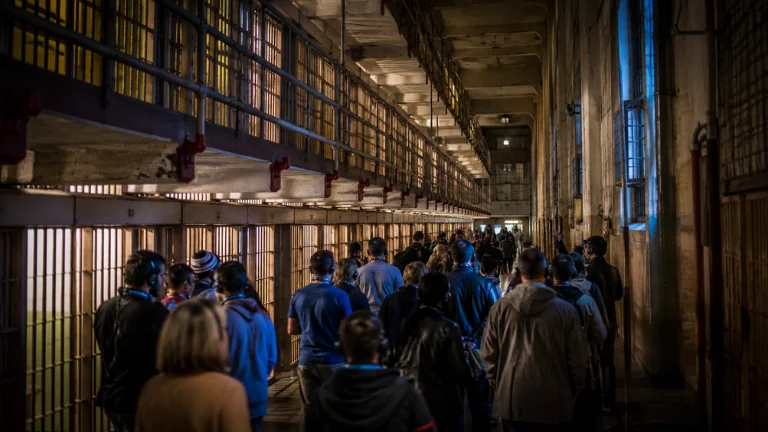
Alcatraz is often described as escape-proof, but the historical record tells a more complex story.
Between 1934 and 1963, 36 inmates were involved in 14 escape attempts. Most failed, but not all outcomes were confirmed.
23 were recaptured
6 were shot and killed
2 drowned
5 disappeared and were never found
The most famous case involves Frank Morris and the Anglin brothers, whose 1962 escape remains unresolved.
This is one of the areas where deeper tours add context. In sections that explore service corridors and structural details, visitors begin to understand how escape attempts were planned and why they were so difficult.
The prison was not impossible to escape from. It was just extremely unforgiving if you tried.
Fear, Isolation, and the Psychological Myth
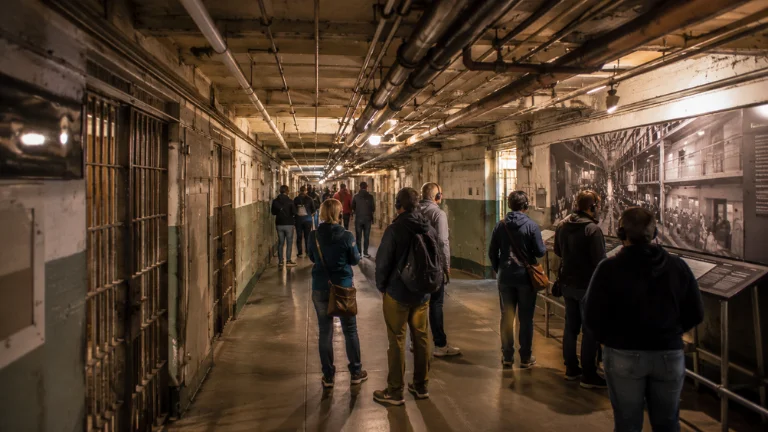
Alcatraz is often remembered as one of the harshest prisons ever built. That perception comes largely from how it has been portrayed.
In reality, conditions were strict but controlled.
The most difficult part of life there was not violence, but repetition. Daily routines rarely changed, and inmates spent long hours in confined spaces with little variation.
Former inmate Alvin Karpis described this monotony as mentally exhausting over time.
For many visitors, this becomes clearer during a daytime visit. Without dramatic lighting or cinematic framing, the prison feels more structured than intimidating.
Famous Inmates and the Stories Around Them
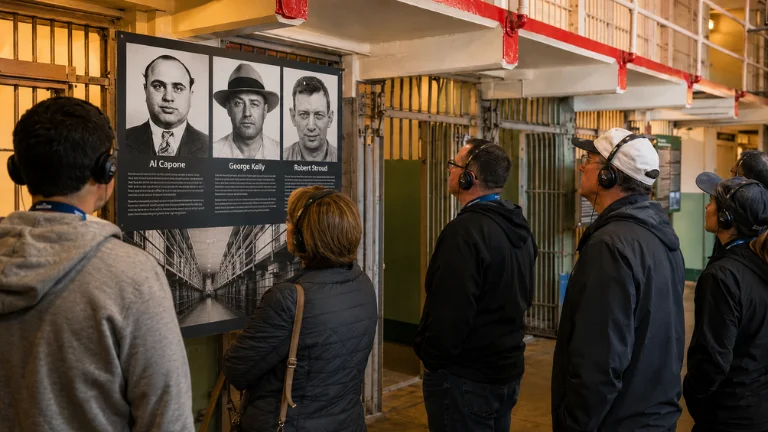
Alcatraz became legendary in part because of the people held there.
Robert Stroud
These names carry their own myths.
Robert Stroud, for example, is widely associated with birds at Alcatraz, even though his research took place before his transfer. At Alcatraz, he had no birds at all.
Storytelling plays a major role here. In quieter, more atmospheric visits, these personalities often feel larger than life, shaped by narration and setting rather than just facts.
The Haunted Alcatraz Story
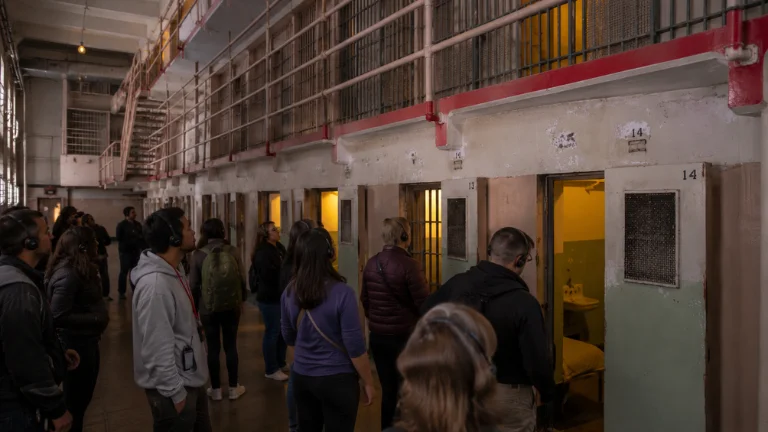
After the prison closed in 1963, a different kind of myth began to grow.
Ghost stories, unexplained sounds, and paranormal experiences became associated with the island. These narratives were not part of its operational history, but they fit naturally with its environment.
Several factors contribute to this:
The isolation of the island
The preserved, empty structures
The history of confinement and escape
The emotional impact of these stories is stronger in quieter, low-light settings, which is one reason evening visits have become especially popular.
How Tourism Reinforces the Myth Today
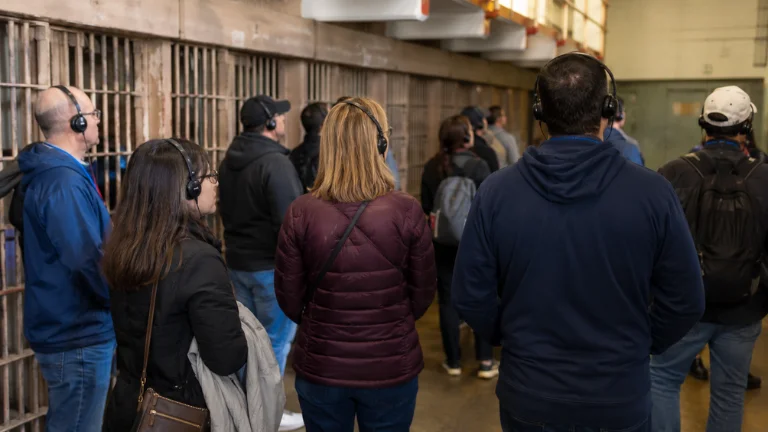
Today, Alcatraz is managed by the National Park Service, and the experience is carefully designed.
Audio tours feature real voices of former inmates and guards. Key events are recreated through sound and pacing. Visitors move through the prison in a structured way that mirrors how life once functioned there.
At the same time, expectations shaped by media influence how visitors interpret what they see.
More detailed experiences go further, opening areas that are not part of the standard route and providing deeper explanations of how the prison operated behind the scenes.
Myth vs Reality: What Visitors Actually Experience
Understanding Alcatraz becomes easier when you compare expectation with reality.
What You Notice During a Day Visit
The prison feels structured rather than chaotic
The city is clearly visible across the bay
The environment is quiet but not overwhelming
What Feels Different in the Evening
Lighting changes how spaces are perceived
Fewer visitors create a more controlled atmosphere
Sound and silence become more noticeable
What Deeper Access Adds
Insight into restricted areas and infrastructure
Better understanding of escape attempts
A clearer picture of how the prison functioned daily
Each experience reveals a different layer of the same place.
Final Thoughts: Why the Myth Still Works
The myth of Alcatraz persists because it is built from multiple sources: history, media, and experience.
The facts alone are not enough to explain its reputation. It is the combination of real events, unresolved stories, and powerful imagery that keeps it alive.
If you want to understand Alcatraz fully, it helps to see it from more than one perspective.
Choosing how you experience it, whether through a daytime visit, an evening experience, or a deeper exploration, can change how the story feels.
Frequently Asked Questions
Is Alcatraz really as scary as it looks in movies?▾
Was Alcatraz truly impossible to escape from?▾
How accurate are movies about Alcatraz prison?▾
What was daily life really like in Alcatraz?▾
Why is Alcatraz considered one of the most famous prisons in the world?▾
Is Alcatraz actually haunted or is that just a myth?▾
Did famous inmates like Al Capone have power inside Alcatraz?▾
Why does Alcatraz feel different at night compared to daytime?▾
What surprises visitors the most about Alcatraz?▾
Why do Alcatraz myths still exist today?▾
Adrian Davis
Published on Alcatraz Island Guide


