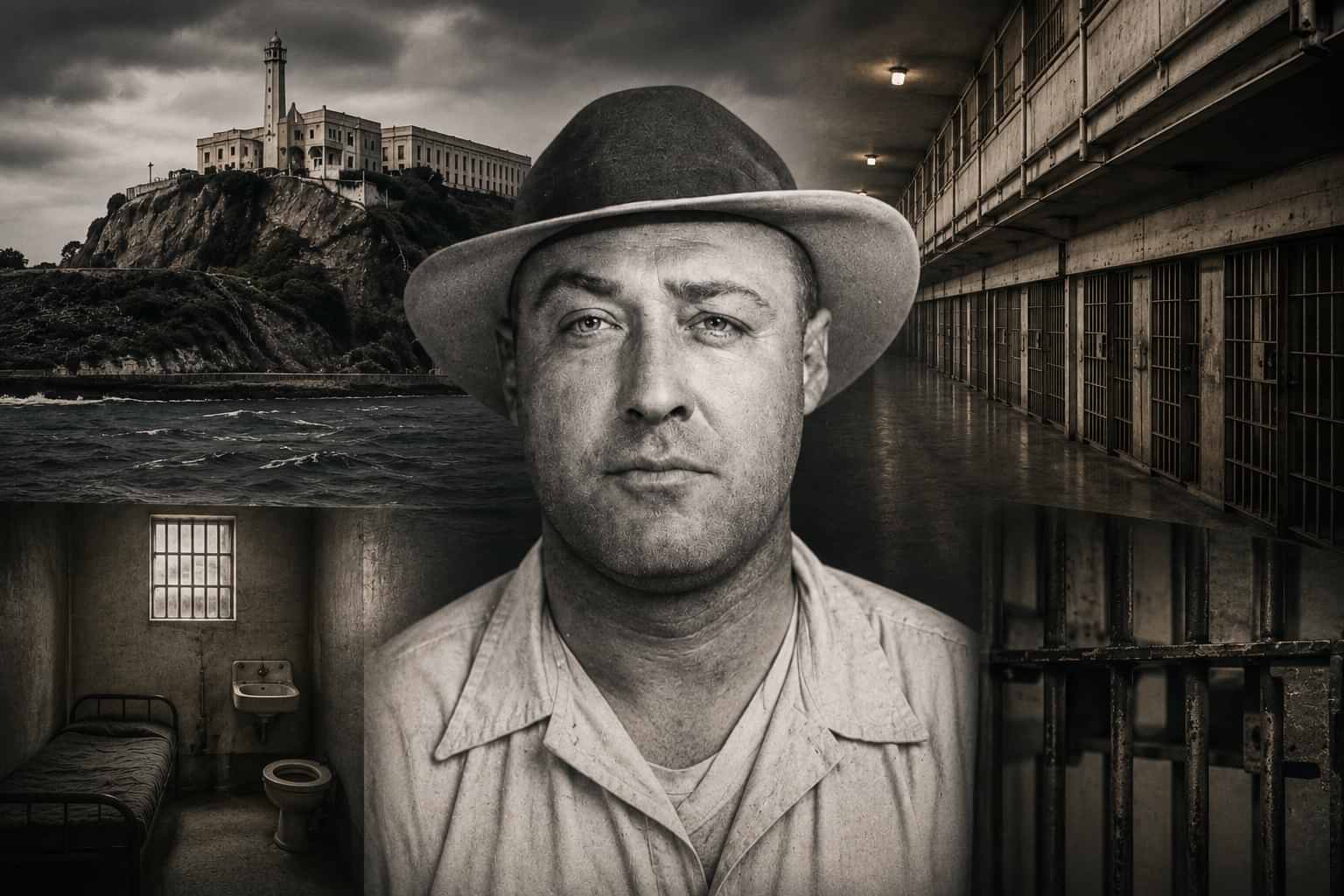
George “Machine Gun” Kelly at Alcatraz: The Real Story Behind Prisoner AZ-117
George “Machine Gun” Kelly is widely remembered as one of the most feared criminals of the 1930s. However, his time inside Alcatraz Federal Penitentiary presents a very different picture, one that challenges the image built around his name.
When Kelly arrived at Alcatraz in 1934, he carried national recognition shaped by media coverage, federal attention, and a carefully constructed reputation. Yet over the course of seventeen years on the island, he did not attempt escape, did not disrupt the system, and did not behave like the figure people expected.
This contrast is essential. It shows how Alcatraz functioned not only as a high-security prison but also as an environment that removed influence, reduced identity, and reshaped behavior.
Early Life of George Kelly Barnes: Background Before Crime
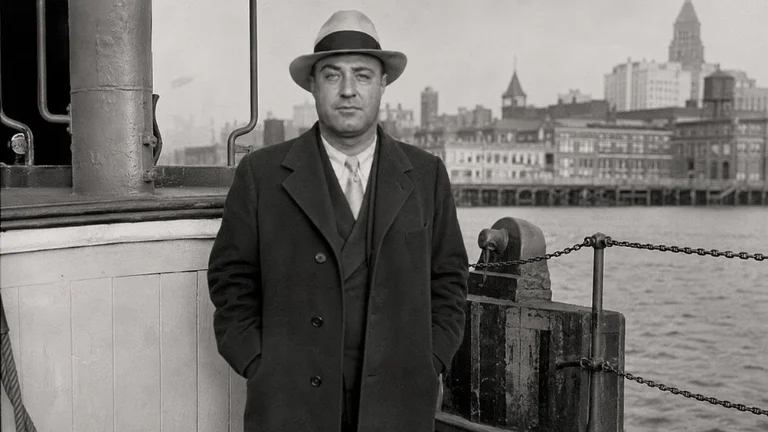
George Kelly Barnes was born in 1895 in Memphis, Tennessee, into a household that provided relative stability and opportunity. His upbringing did not reflect the typical background associated with high-profile criminals. His father held a steady job in the insurance field, and Kelly had access to education, including time spent in college before eventually leaving.
There was no single turning point that led him into crime. Instead, his involvement developed gradually, influenced by environment and opportunity rather than immediate necessity. During Prohibition, he entered bootlegging, a common pathway into illegal activity at the time due to its profitability and widespread participation.
As his connections grew, he became involved in more organized criminal operations, including bank robbery. These activities required planning, coordination, and mobility, but even at this stage, Kelly remained relatively unknown within the broader criminal landscape.
How “Machine Gun” Kelly Got His Name: Myth vs Reality
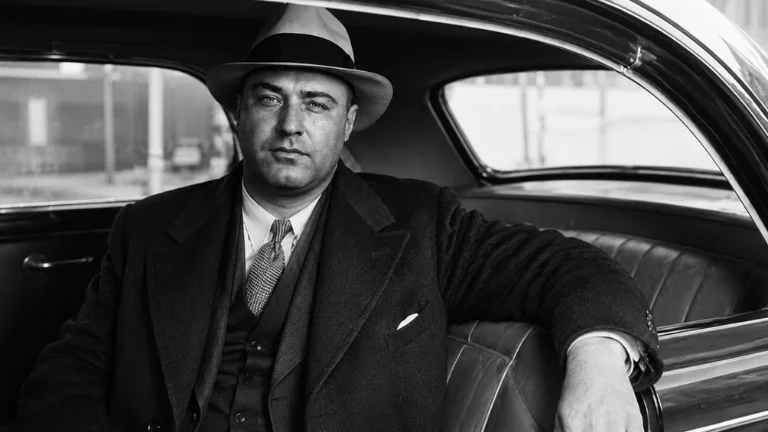
The Role of Kathryn Thorne in Building His Image
The identity of “Machine Gun” Kelly was not a direct reflection of his criminal actions. It was intentionally developed, largely through the efforts of his wife, Kathryn Thorne.
Kathryn recognized the value of reputation in the criminal world. She actively promoted Kelly as a dangerous and heavily armed figure, using storytelling, symbolic demonstrations, and consistent messaging to shape how others perceived him. This included encouraging firearm use in controlled settings to reinforce the narrative she was creating.
Her efforts turned Kelly into a recognizable figure before his crimes gained national attention. By the time the media began covering his activities, the image was already established.
Did He Actually Use a Machine Gun?
Despite the strength of his nickname, there is no verified evidence that Kelly used a machine gun during a criminal act. The weapon functioned more as a symbol than as a practical tool in his crimes.
This distinction highlights a key point: Kelly’s influence was largely perception-based. His reputation depended on external reinforcement, media, networks, and audience, rather than consistent demonstration of extreme violence.
The Urschel Kidnapping Case: What Led to His Arrest
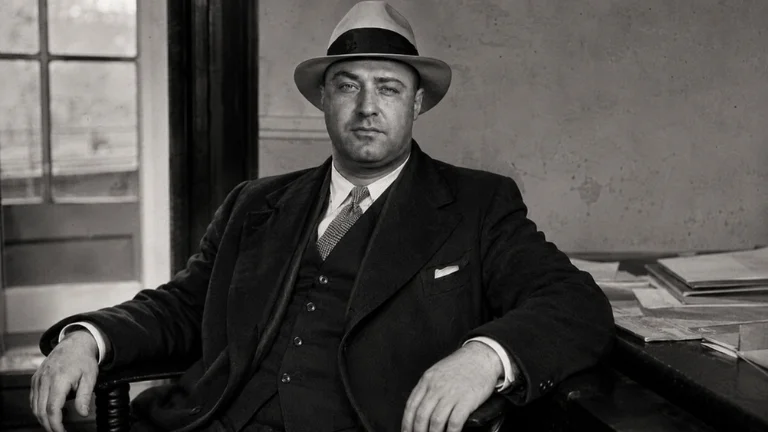
Execution of the 1933 Kidnapping
In July 1933, Kelly and associate Albert Bates kidnapped Oklahoma oil businessman Charles Urschel from his home. The operation was direct and controlled, focusing on efficiency rather than intimidation or spectacle.
Urschel was held for ransom over several days, during which time the kidnappers attempted to maintain control and avoid detection. The crime itself reflected planning and coordination, but it did not match the dramatic image associated with Kelly’s name.
How the FBI Solved the Case
What made this case notable was Urschel’s response during captivity. He paid close attention to details such as sounds, routines, and environmental conditions, mentally recording information that would later assist investigators.
After his release, these observations allowed law enforcement to identify the location where he had been held. Under J. Edgar Hoover, the FBI used this information to trace connections and dismantle the network involved in the crime.
Kelly was arrested in September 1933 and later convicted, receiving a life sentence.
Why George Kelly Was Sent to Alcatraz
Purpose of Transfer to Alcatraz
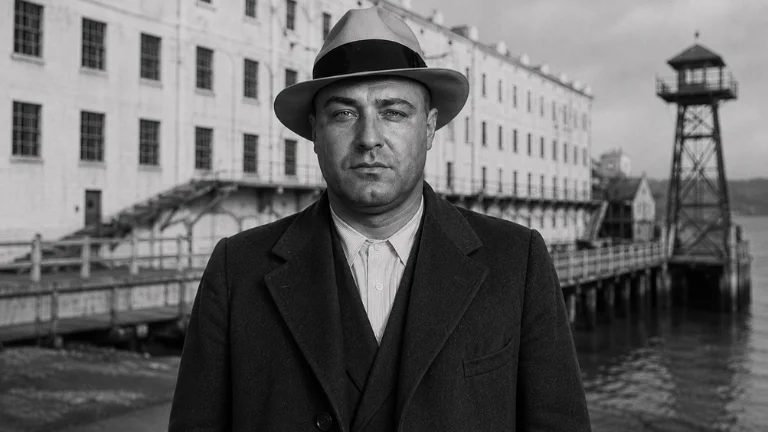
Kelly was transferred to Alcatraz Federal Penitentiary in 1934, shortly after the facility opened. This decision was based on more than the severity of his crime.
Alcatraz was intended for inmates who posed broader risks, including influence over others, connections to organized crime, and strong public recognition. Kelly met these criteria, making him a suitable candidate for placement in a high-control environment.
Prisoner AZ-117: Identity Inside Alcatraz
Upon arrival, Kelly was assigned the number AZ-117. This shift from name to number reflects how Alcatraz operated.
The prison eliminated the importance of reputation. All inmates followed the same routines, received the same treatment, and were subject to the same restrictions. External identity had no operational value within the system.
Daily Life at Alcatraz: Structure, Rules, and Routine
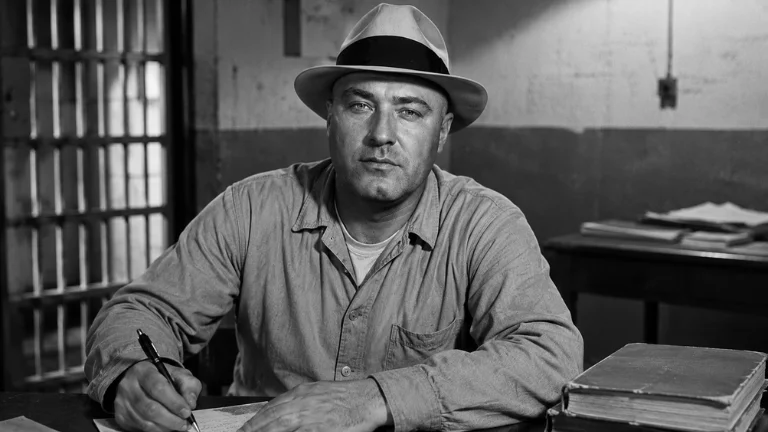
Life inside Alcatraz was highly structured. Inmates followed a strict daily schedule that included multiple counts, supervised meals, assigned labor, and limited recreation.
Cells were small and standardized, designed for function rather than comfort. Movement between areas required authorization, and staff maintained continuous oversight of inmate activity.
The prison also enforced communication limits, including silence rules during certain periods, particularly in its early years. These restrictions were intended to prevent coordination and maintain order.
The island’s location added another dimension. The visible proximity of San Francisco contrasted with the difficulty of reaching it due to cold water temperatures and strong currents.
Behavior of Machine Gun Kelly in Alcatraz
Why He Became a Model Prisoner
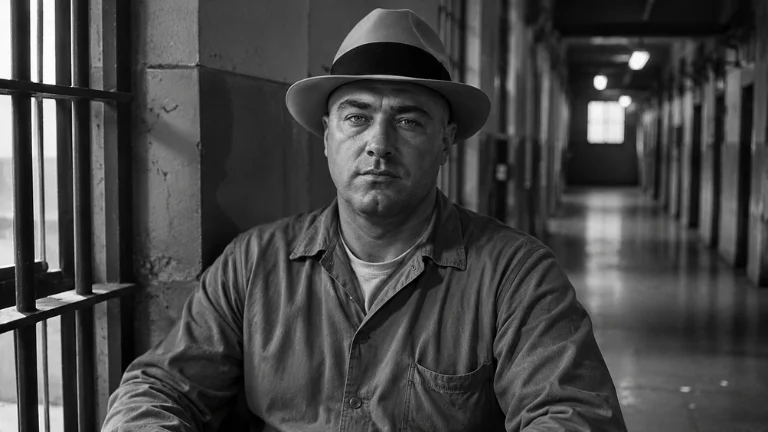
Contrary to expectations, Kelly adapted to the prison environment quickly. Records from Alcatraz staff describe him as cooperative, respectful, and consistent in following rules.
He completed assigned work, avoided conflicts, and maintained stable behavior throughout his time on the island. This pattern remained unchanged over seventeen years.
Understanding His Compliance
Kelly’s behavior can be understood by examining the nature of his previous influence. His reputation depended on external systems, media attention, criminal networks, and perception.
Inside Alcatraz, those systems were removed. Without them, resistance offered no advantage. Compliance became the most practical and effective way to function within the institution.
Seventeen Years at Alcatraz: Long-Term Impact
Kelly remained at Alcatraz from 1934 to 1951. Over this period, his life followed a consistent routine shaped entirely by the institution.
He participated in work assignments, maintained correspondence, and remained largely free of disciplinary issues. Some of his letters reflected a more reflective perspective on his past, including indirect connections to Charles Urschel.
Over time, the identity of “Machine Gun” Kelly diminished. Without reinforcement, it no longer carried meaning inside the prison environment.
Timeline: George “Machine Gun” Kelly
1895 — Born (July 18) in Memphis, Tennessee
1920s — Enters crime via bootlegging during Prohibition
Late 1920s–early 1930s — Expands into bank robbery across Midwest
July 22, 1933 — Kidnaps Charles Urschel (Oklahoma City case)
Sept 26, 1933 — Arrested in Memphis by FBI
1933–1934 — Convicted → sentenced to life imprisonment
1934 — Transferred to Alcatraz Federal Penitentiary as inmate AZ-117
1934–1951 — Serves 17 years at Alcatraz (no escape attempts, cooperative behavior)
1951 — Transferred to Leavenworth Federal Penitentiary
July 18, 1954 — Dies at Leavenworth (age 59)
What His Case Teaches About Alcatraz
Kelly’s experience illustrates how Alcatraz functioned beyond physical security. The prison was designed to eliminate influence and standardize behavior.
By removing external systems of power, it reduced inmates to their actions within the institution. This explains why several high-profile prisoners became manageable once placed in this environment.
The system did not rely on force alone. It changed the conditions under which individuals operated.
Visiting Alcatraz Today: Explore Kelly’s Story
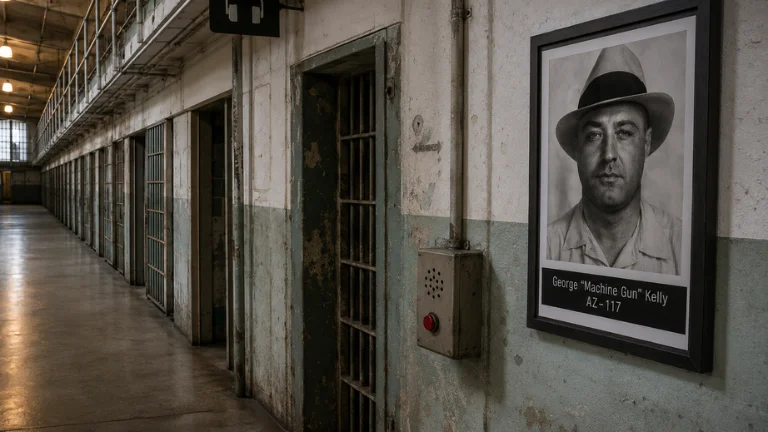
Visitors to Alcatraz Federal Penitentiary can step into the environment that shaped George "Machine Gun" Kelly’s time on the island.
The cellhouse highlights uniform living conditions, while the dining hall and work areas show the strict daily routine. From the exercise yard, the view of the mainland adds a powerful sense of isolation, something best understood during a day tour.
A night tour offers a completely different perspective, with fewer crowds and a quieter setting that makes the space feel more intense and immersive.
For a deeper look, some visitors choose a behind-the-scenes experience, where restricted areas and operational spaces reveal how the prison truly functioned.
Final Conclusion: The Reality Behind the Name
George “Machine Gun” Kelly entered Alcatraz with a reputation built on perception and promotion. Over seventeen years, that reputation lost its function.
What remained was an individual operating within a controlled system, defined by routine and behavior rather than identity.
His story demonstrates that Alcatraz was not just a prison. It was a system designed to remove influence, and in his case, it did so completely.
Frequently Asked Questions
Who was George “Machine Gun” Kelly and why is he famous?▾
Did Machine Gun Kelly actually use a machine gun?▾
Why was Machine Gun Kelly sent to Alcatraz?▾
What was Machine Gun Kelly’s prisoner number at Alcatraz?▾
How long did Machine Gun Kelly stay at Alcatraz?▾
Did Machine Gun Kelly try to escape from Alcatraz?▾
What crime led to Machine Gun Kelly’s arrest?▾
Did Machine Gun Kelly really say “Don’t shoot, G-Men”?▾
What was life like for Machine Gun Kelly in Alcatraz?▾
How did Alcatraz change Machine Gun Kelly?▾
Adrian Davis
Published on Alcatraz Island Guide


