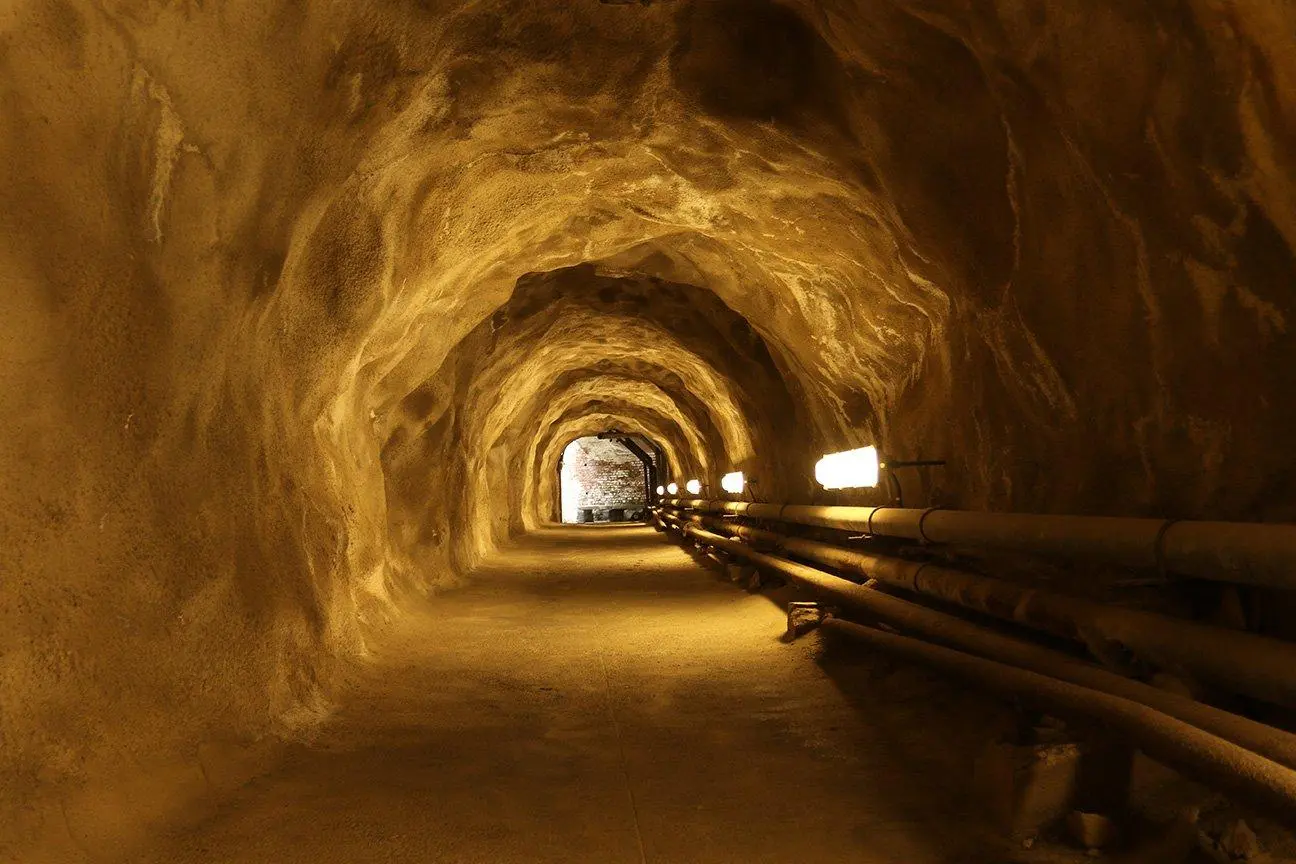
Alcatraz Tunnels: The Hidden Passages Beneath the Rock
When people hear the name Alcatraz, they usually picture the cold prison cells, the high walls, and the infamous escape attempts. But there is another part of the island that sparks just as much curiosity: Alcatraz tunnels.
Hidden beneath and around the island are passages, service areas, and underground spaces that have become part of Alcatraz's fascinating history. Some are connected to the island's military past, while others served practical purposes during its years as a federal prison.
Over time, stories about these underground spaces have also inspired plenty of myths and speculation.
So, what are the Alcatraz tunnels, and what were they actually used for? Let's take a closer look.
What Are the Alcatraz Tunnels?
If you want to explore the prison complex and learn more about its history, consider taking Alcatraz federal penitentiary tours for a closer look at the island’s historic buildings and facilities.
The term "Alcatraz tunnels" is often used to describe the underground passageways and service tunnels found beneath parts of Alcatraz Island.
Alcatraz wasn't built solely as a prison. Long before it became one of America's most famous penitentiaries, the island was used as a military fortification. The military constructed defensive structures, storage areas, tunnels, and other underground facilities as the island evolved.
When the federal prison opened in 1934, some of these existing structures remained. They became part of the island's infrastructure, helping with maintenance, utilities, storage, and access between different areas.
This layered history is one reason Alcatraz feels so mysterious. You're not simply walking through an old prison—you're walking through several chapters of American history at once.
Were There Really Tunnels Under Alcatraz?
Yes, underground passages and tunnels existed on Alcatraz Island. However, popular stories sometimes make them sound far more mysterious or extensive than the historical evidence suggests.
Some underground spaces were associated with the island's military installations and later adapted for other purposes. They weren't necessarily secret escape routes stretching beneath San Francisco Bay, as some legends might have you believe.
The reality is actually more interesting in its own way.
These passages reflect how Alcatraz changed over the decades. Structures that had one purpose during the island's military era could later become useful to the prison administration.
The Military History Behind the Alcatraz Tunnels
To understand the Alcatraz tunnels, you have to go back before the prison existed.
During the 19th century, Alcatraz became an important military site. Its location in San Francisco Bay made it strategically valuable for defending the entrance to the harbor.
Fortifications were built across the island, including underground areas and passageways associated with the military complex.
Some of these structures were later incorporated into the federal prison environment. As a result, today's Alcatraz contains remnants of several different eras.
It's easy to forget this while standing inside a prison cell, but Alcatraz had already lived an entire life before the famous penitentiary opened.
Were the Tunnels Used for Escapes?
This is where fact and legend often become tangled.
Alcatraz is famous for the 1962 escape involving Frank Morris and brothers John and Clarence Anglin. The three men escaped their cells and disappeared from the prison, leaving behind carefully constructed dummy heads and a route through the prison's utility corridor system.
Their disappearance helped create one of America's most enduring mysteries.
However, the famous escape was not an escape through a secret tunnel running underneath the island and out into the bay. The prisoners used access through the prison's utility corridor and ultimately made their way outside the main cellhouse before reaching the water.
The existence of underground passages has sometimes caused people to connect them directly with the escape story, but the actual escape route was more complicated—and arguably more fascinating.
The Alcatraz Tunnels and the 1962 Escape
For a different atmosphere, Alcatraz night tour tickets can provide an evening experience that adds another layer of atmosphere to the island’s mysterious history.
The 1962 escape is probably the biggest reason people search for information about Alcatraz tunnels today.
Frank Morris and the Anglin brothers spent months secretly enlarging openings around the plumbing areas behind their cells. They eventually gained access to a utility corridor that ran behind the cell blocks.
From there, they reached an area outside the cellhouse and climbed toward the prison's exterior.
They then launched a makeshift raft made from raincoats and disappeared into San Francisco Bay.
What happened next remains unknown.
Were they swept away by the cold water and strong currents? Did they reach the mainland? Did they survive and start new lives somewhere else?
No definitive answer has ever been established.
That uncertainty has kept the Alcatraz escape story alive for generations.
Why Are the Alcatraz Tunnels So Fascinating?
Seeing Alcatraz from the water can also give you a different perspective on the island, and a San Francisco Bay cruise is one way to experience its position in the middle of the bay.
Part of the appeal comes from the contrast between what is known and what remains uncertain.
Alcatraz is a relatively small island, yet it contains layers of history beneath its surface. Military defenses, prison infrastructure, abandoned structures, utility systems, and underground areas all contribute to its atmosphere.
There's also something naturally mysterious about a tunnel.
You can't see where it leads from the entrance. You can't always tell why it was built simply by looking at it. Add the history of one of America's most notorious prisons, and it's easy to understand why stories grow around these spaces.
For visitors, the tunnels represent another side of Alcatraz—the side that isn't immediately visible.
For visitors interested in seeing Alcatraz during daylight hours, an Alcatraz Island day tour offers an opportunity to explore the island and its historic prison complex.
Are the Alcatraz Tunnels Open to Visitors?
Not every underground area on Alcatraz Island is accessible to the public.
Visitor access can depend on the area, preservation requirements, restoration work, and current National Park Service policies. The main prison buildings and historically significant areas are the focus of most visitor experiences.
If you're planning a trip, it's worth checking the current visitor information before assuming a particular underground passage will be accessible.
Alcatraz Tunnels: Fact vs. Fiction
The internet is full of dramatic stories about secret tunnels beneath Alcatraz. Some are based on real structures, while others have grown through decades of storytelling.
Here's the important distinction:
Real: Alcatraz Island has underground passages and structures dating back to its military history.
Real: The prison also had utility corridors and service spaces.
Real: The 1962 escape involved access to a utility corridor.
Uncertain: The ultimate fate of Frank Morris and the Anglin brothers.
Mostly legend: Claims that a vast network of secret tunnels allowed prisoners to escape directly from Alcatraz to San Francisco.
The truth doesn't need much embellishment. Alcatraz already has one of the strangest histories in the United States.
A Different Way to Experience Alcatraz
If you're interested in exploring more of the Bay Area’s island history, an Alcatraz & Angel Island tour combines two historically significant islands in one experience.
When you visit Alcatraz, it's tempting to focus only on the famous prison cells and escape stories. But paying attention to the island's less visible infrastructure can make the experience much richer.
Think about the people who built the original military fortifications. Think about the workers who maintained the island. Think about the prisoners who knew the prison's corridors better than almost anyone.
And then think about the fact that beneath the familiar prison complex are traces of an even older Alcatraz.
That's what makes the story of the Alcatraz tunnels so compelling.
They're not simply mysterious passageways. They're physical reminders that Alcatraz was a military fortress, a federal penitentiary, and eventually a historic site—all occupying the same small piece of rock in San Francisco Bay.
For another memorable view of Alcatraz and the surrounding bay, a San Francisco sunset cruise offers the chance to see the island as the light changes over San Francisco Bay.
Final Thoughts
The Alcatraz tunnels are a fascinating part of the island's history, but separating fact from fiction is essential. While underground passages and utility corridors certainly existed, many of the more dramatic tunnel stories have been exaggerated over the years.
Perhaps that's part of Alcatraz's magic.
Even after decades of research, the island still leaves room for questions. Its walls have stories, its cells have stories, and even its hidden spaces have stories.
And somewhere between the documented history and the legends is the reason Alcatraz continues to capture our imagination.
The Rock may be small, but its mysteries run deep.
Frequently Asked Questions
1. Are there really tunnels under Alcatraz?▾
2. What were the Alcatraz tunnels used for?▾
3. Did prisoners escape through the Alcatraz tunnels?▾
4. Did Frank Morris use a tunnel to escape Alcatraz?▾
5. Can visitors explore the Alcatraz tunnels?▾
6. Are the Alcatraz tunnels connected to San Francisco?▾
7. Why are the Alcatraz tunnels famous?▾
Adrian Davis
Published on Alcatraz Island Guide


