The Truth About Al “Scarface” Capone at Alcatraz: A Complete Timeline
The story of Al Capone is often summarized through his time at Alcatraz Federal Penitentiary, but that phase only makes sense when placed within a full timeline.
Capone’s years at Alcatraz were not the beginning of his fall. They were the final stage of a long progression that began in New York, expanded in Chicago during Prohibition, and eventually collapsed when his system of influence stopped functioning.
Understanding that progression is what explains why Alcatraz succeeded where every other system failed.
1899–1918: Early Life, Street Environment, and the “Scarface” Turning Point
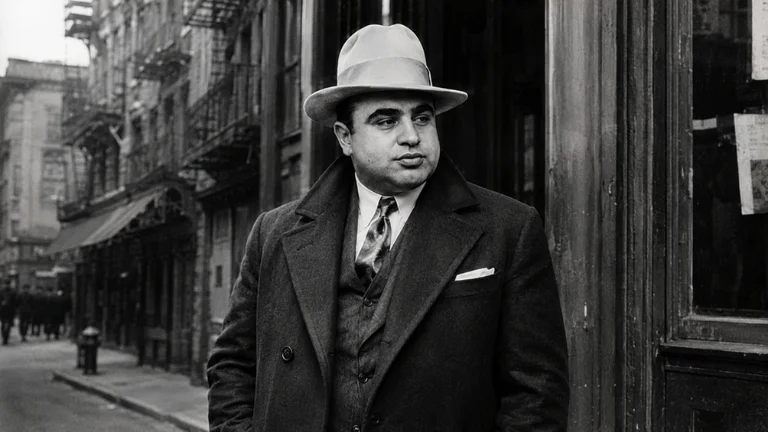
Alphonse Gabriel Capone was born in 1899 in Brooklyn, New York, into a family of Italian immigrants. His upbringing reflected the realities of densely populated working-class neighborhoods where opportunity was limited and competition was constant. These environments often shaped behavior early, especially for young men exposed to informal street economies.
During his teenage years, Capone became involved with groups such as the Five Points Gang. These were not loosely formed street gangs. They operated with internal structure, hierarchy, and expectations of loyalty. This exposure introduced him to a system where influence was built through reputation and consistency.
A defining turning point came while he was working at the Harvard Inn. During an interaction, Capone made a remark toward a woman that was considered disrespectful. Her brother, Frank Galluccio, responded by attacking him with a knife, leaving deep cuts across his face.
The scars became permanent, and so did the nickname “Scarface.” Capone strongly disliked the name, but it became part of his public identity. More importantly, the incident reinforced a key principle that would define his later life: reputation carried consequences, and respect had to be maintained.
This moment marked a shift from casual involvement in street activity to a deeper understanding of how image and control operated within criminal environments.
1919–1925: Chicago, Johnny Torrio, and the Transition to Organized Systems
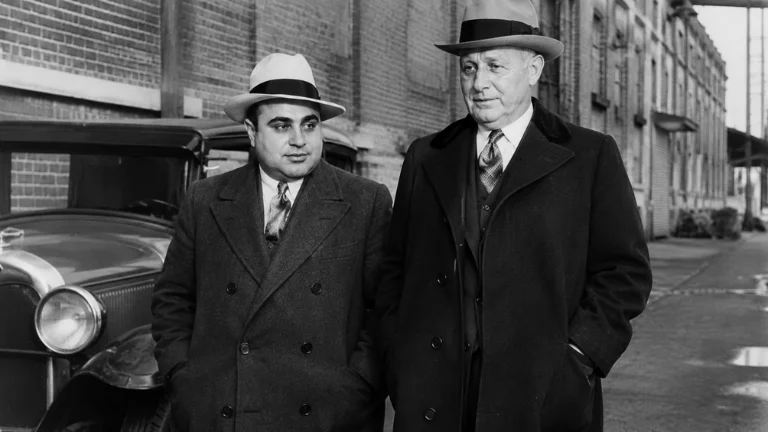
Capone’s move to Chicago in 1919 under the guidance of Johnny Torrio was one of the most important turning points in his life. It was not simply a geographic change. It was an entry into a more advanced and structured criminal system.
Torrio operated differently from local gangs. His approach emphasized planning, negotiation, and calculated use of force rather than constant violence. He treated crime as an organized operation rather than a series of isolated actions.
The timing of this move was critical. Prohibition began in 1920, creating a large and consistent demand for illegal alcohol. This transformed crime from small-scale activity into a highly profitable and scalable system.
Capone learned how to manage distribution networks, coordinate operations across different areas, and maintain relationships that reduced enforcement pressure. These skills were not developed overnight. They were built through observation and participation within Torrio’s system.
In 1925, after Torrio was seriously injured in an attack, he chose to retire. Capone took control of the organization. This transition was not just about leadership. It was the transfer of a functioning system into the hands of someone who had learned how to operate it effectively.
At twenty-six, Capone moved from participant to central figure.
1925–1931: Expansion, Control, and Rising Pressure
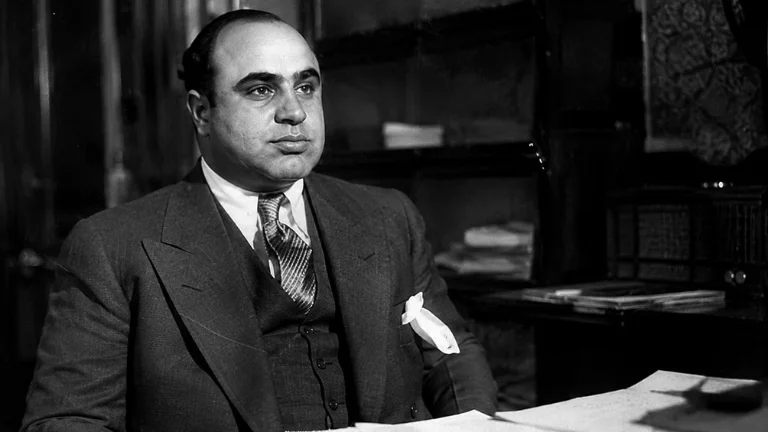
After taking control, Capone expanded operations rapidly. His organization dominated bootlegging, gambling, and other illegal activities across Chicago. The scale of these operations generated significant revenue, but money alone did not define his power.
The key factor was integration. His system extended beyond criminal activity into local governance structures. Relationships with officials reduced enforcement risks and allowed operations to continue with relative stability.
Violence was present, but it was often controlled and strategic. It was used to maintain dominance rather than create chaos. This approach helped stabilize his position while discouraging competition.
The St. Valentine’s Day Massacre in 1929 became a major turning point. Although Capone was never convicted, the event drew national attention and increased pressure on authorities to act.
At this stage, Capone’s identity shifted. He was no longer just a powerful figure in Chicago. He became a national symbol of organized crime, which made him a priority target.
1931: Conviction Through Financial Investigation
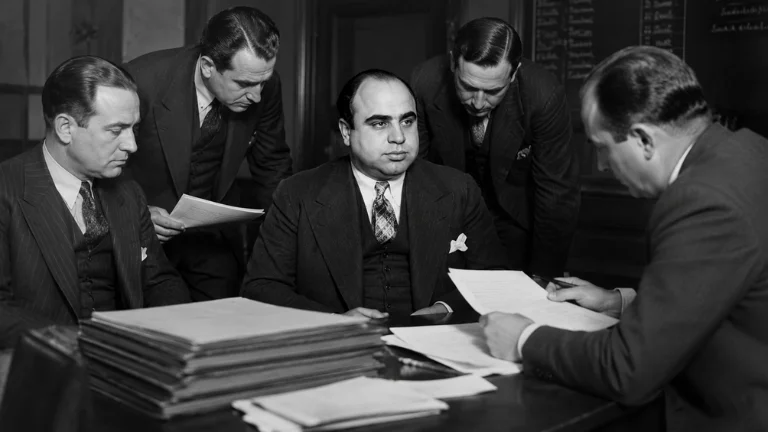
Despite years of criminal activity, Capone was not convicted for violent crimes. His system protected him from direct association with specific acts, making traditional prosecution difficult.
The strategy changed when authorities focused on financial evidence. Instead of trying to prove involvement in violent crimes, they analyzed discrepancies between his income and lifestyle.
This approach removed dependence on witnesses and focused on documented proof.
His conviction for tax evasion in 1931 represented a critical turning point. It demonstrated that while his operational system was strong, it still relied on financial structures that could be traced and challenged.
This marked the beginning of the collapse, not through confrontation, but through exposure of underlying systems.
1932–1934: Atlanta Prison and the Limits of Traditional Confinement
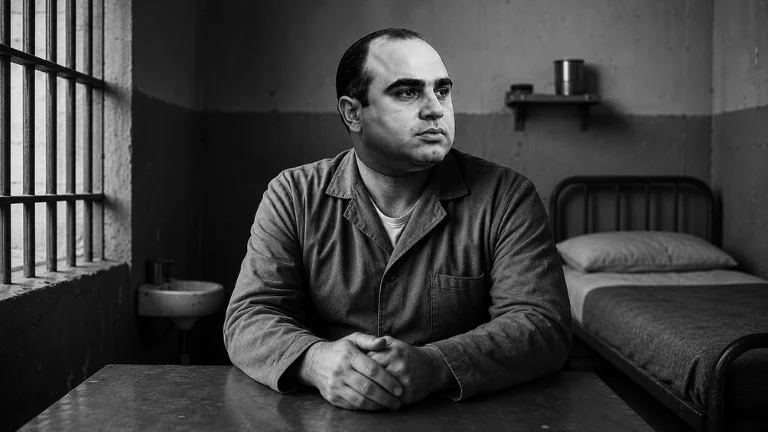
Capone’s imprisonment at Atlanta Federal Penitentiary revealed that confinement alone was not enough to eliminate influence.
Even within prison, he was able to secure better conditions through bribery and maintain limited communication with the outside world. These connections allowed him to remain linked to his network.
This exposed a structural weakness. As long as communication existed, influence could continue.
The issue was not security in terms of physical confinement. It was the inability to fully isolate an inmate from external systems.
This realization led to the decision to transfer Capone to a facility designed to address that exact problem.
1934: Transfer to Alcatraz and Complete System Isolation
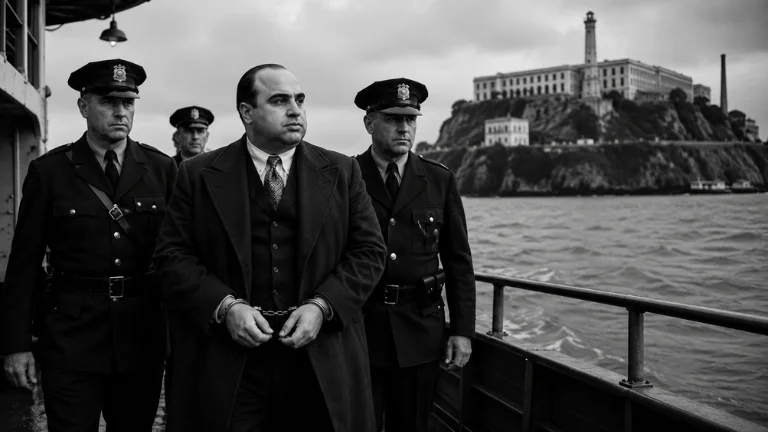
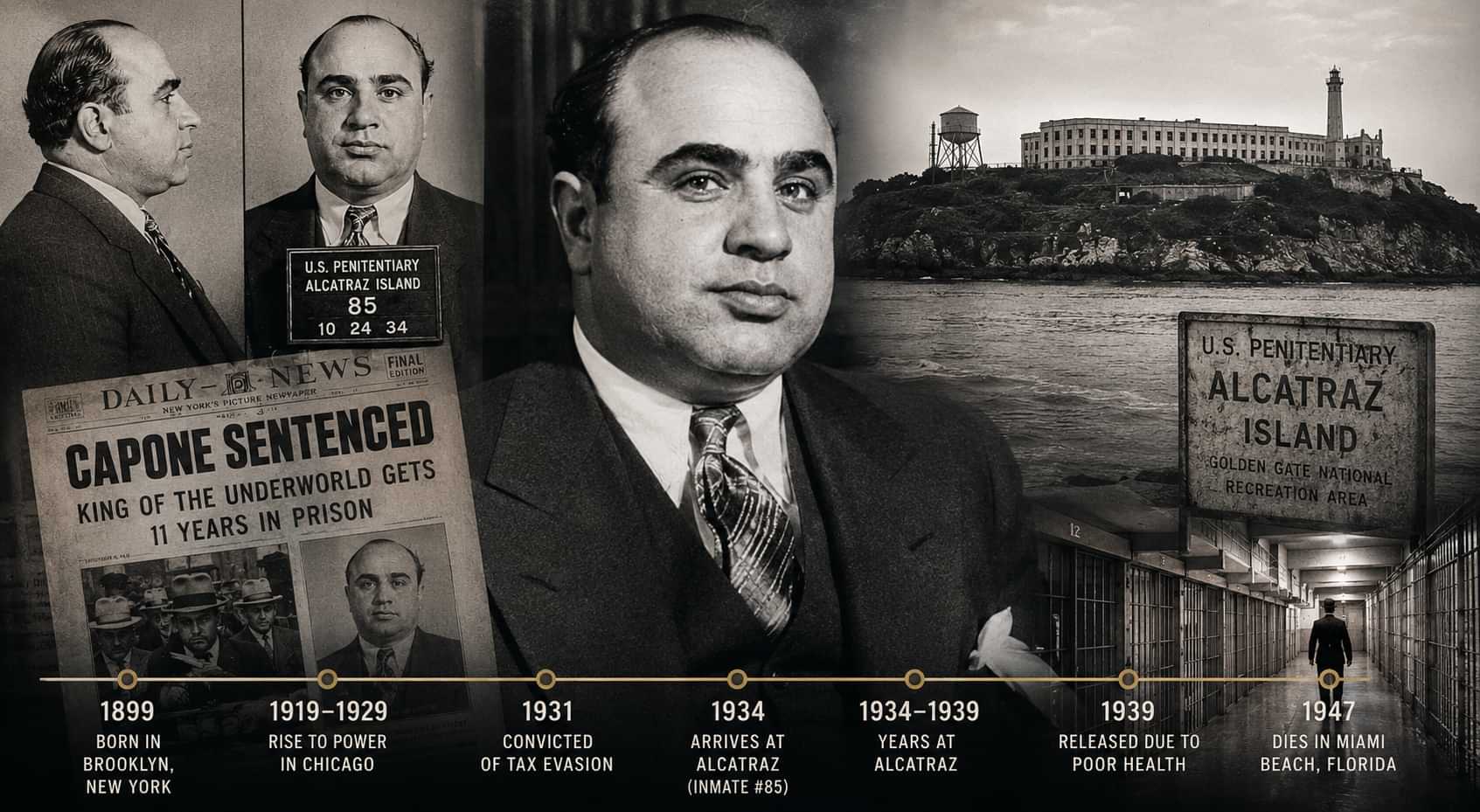
In August 1934, Al Capone was transferred to Alcatraz Federal Penitentiary and assigned inmate number AZ-85. This moment marked a fundamental shift, not just in location, but in how control was applied.
Alcatraz was designed specifically for inmates who could not be managed in standard prisons. The goal was not simply to confine, but to isolate in a way that removed influence entirely. The prison operated on strict uniformity. Every inmate followed the same schedule, performed assigned labor, and adhered to the same rules without exception.
The island itself reinforced this system. Surrounded by cold, fast-moving water, it created a natural barrier that limited both physical escape and psychological hope of return. At the same time, internal controls restricted communication, ensuring that inmates could not maintain active connections with the outside.
For Capone, this meant the complete removal of the conditions that had allowed his power to function.
1934–1937: Gradual Loss of Influence Inside Alcatraz
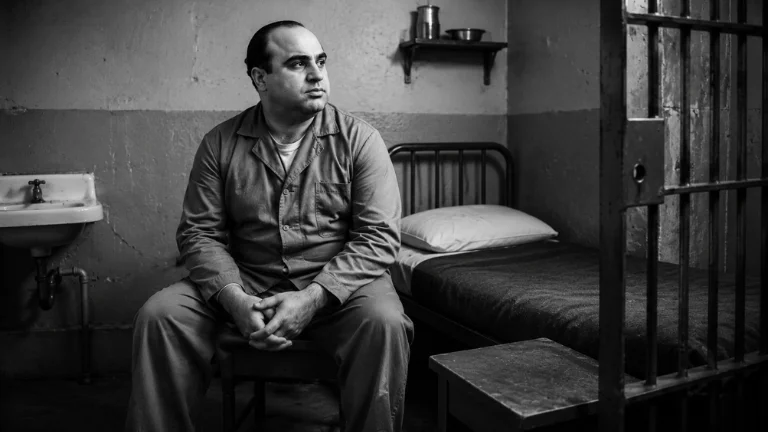
Capone’s early period at Alcatraz was not defined by immediate collapse, but by gradual loss.
In previous environments, he had relied on negotiation, influence, and relationships to shape outcomes. At Alcatraz, those methods produced no response. Guards followed strict procedures, and inmates had limited ability to interact in ways that could create hierarchy or control.
Without communication channels, his external network became inactive. Orders could not be sent, and information could not be received in a meaningful way. Influence, which depends on feedback and coordination, began to lose its function.
This process was not dramatic. It unfolded through consistency. Each day reinforced the same reality. No privilege, no negotiation, no adjustment.
Over time, the absence of response replaced the need for enforcement. His authority did not collapse in a single moment. It faded because the system no longer recognized it.
Daily Life at Alcatraz: Routine, Labor, and Controlled Movement
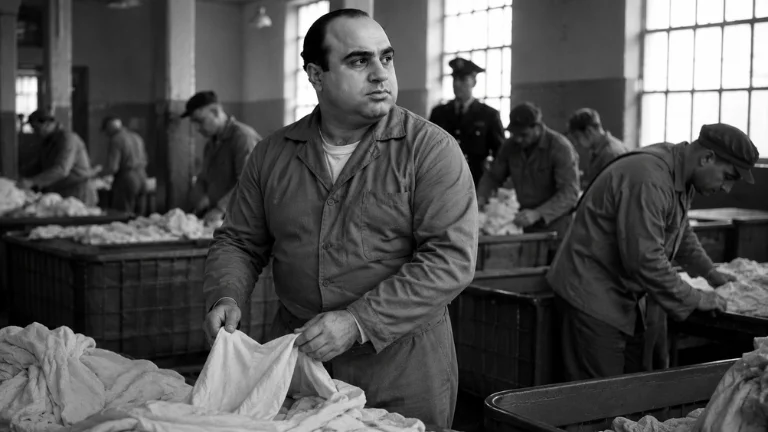
Life at Alcatraz Federal Penitentiary followed a strict and repetitive structure designed to remove unpredictability.
Capone’s day began with scheduled counts that ensured constant accountability. Meals were taken under supervision, and movement between areas required authorization. Work assignments were mandatory, and Capone was placed in the prison laundry.
This assignment was significant not because of difficulty but because of its neutrality. It offered no influence, no advantage, and no connection to his previous identity. It placed him within the system rather than above it.
Recreation was limited and structured. One of the few outlets available was participation in the prison band. Capone played the banjo as part of this group. This activity required focus and repetition, providing a controlled form of engagement within the system.
The routine itself became the defining feature of daily life. It did not rely on constant force. It relied on predictability.
Communication Control: The Key to Neutralizing Power
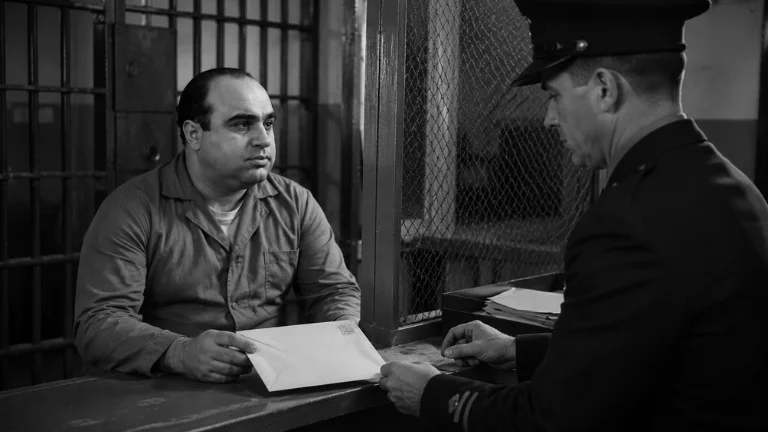
The most important difference between Alcatraz and earlier prisons was control over communication.
Letters were monitored, visits were limited, and informal exchanges were restricted. Even interactions between inmates were regulated to prevent coordination.
Capone’s power had depended on communication. His ability to direct operations, maintain alliances, and influence outcomes relied on the movement of information.
At Alcatraz, that movement stopped.
Without communication, his network became inactive. Without feedback, authority became theoretical rather than functional. Over time, this disconnection made his previous system irrelevant.
1937–1939: Health Decline and Reduced Capacity
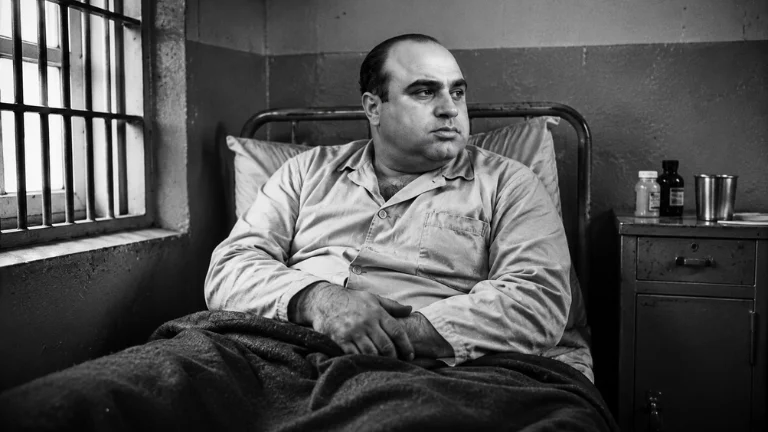
As his time at Alcatraz continued, Capone’s health deteriorated due to neurosyphilis. The condition affected his nervous system and gradually reduced his cognitive abilities.
Symptoms included memory loss, confusion, and difficulty maintaining attention. These changes affected his ability to engage with routines and respond to his environment.
This stage introduced a different form of decline. While the prison system had already removed his external power, his illness reduced his internal capacity to function.
The two processes overlapped. The system removed influence, and the illness reduced awareness.
1939: Transfer Out of Alcatraz
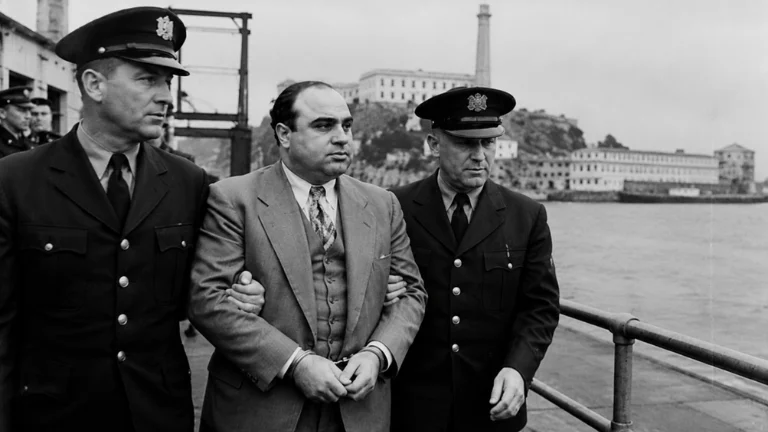
By 1939, Capone’s condition required medical care beyond what Alcatraz could provide. He was transferred to another facility.
There was no dramatic ending to his time on the island. His departure followed the same procedural structure that defined his imprisonment. The system did not change, and it did not need to.
1940–1947: Final Years Without Control
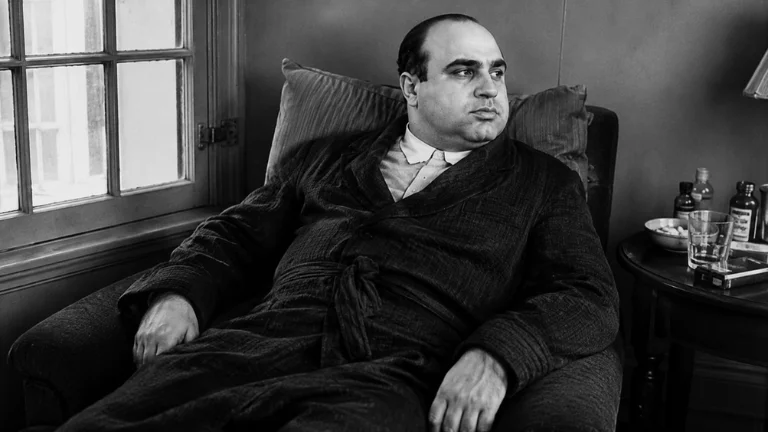
After leaving Alcatraz, Capone was transferred to Terminal Island, where he remained until his release in 1939 before returning to Florida. By then, he was already suffering from advanced paresis (syphilis), a late stage of syphilis, which had caused severe neurological damage, memory loss, and mental decline. His condition continued to worsen, leaving him increasingly dependent on others.
Following his release, he was treated at a hospital in Baltimore, but the damage was irreversible. He later retired to his Florida home, where he lived quietly under family care. Capone died on January 25, 1947, at the age of 48, from complications related to his declining health, marking the end of a life that had shifted from power to complete dependency.
Timeline Summary: Final Phase of Al Capone’s Life
1899 — Born in Brooklyn, New York
1910s — Gets involved in street gangs; builds early reputation
1918 — Facial scar incident leads to the nickname “Scarface”
1919 — Moves to Chicago and joins Johnny Torrio’s organization
1920–1925 — Rises during Prohibition, learning organized crime systems
1925 — Takes control of Chicago crime syndicate
1925–1929 — Expands empire; dominates bootlegging and illegal operations
1929 — St. Valentine’s Day Massacre brings national attention
1931 — Convicted of tax evasion; beginning of downfall
1932–1934 — Imprisoned in Atlanta but still maintains influence
1934 — Transferred to Alcatraz Federal Penitentiary
1934–1937 — Influence gradually disappears under strict prison system
1937–1939 — Health declines due to neurosyphilis
1939 — Transferred out of Alcatraz for medical reasons
1939 (Nov) — Released from Terminal Island
1939–1940 — Receives treatment in Baltimore
1940–1946 — Lives in Florida under family care, isolated and ill
1947 (Jan 25) — Dies at age 48
How to Experience This Story During Your Visit

Visiting Alcatraz Island in San Francisco allows you to understand this timeline in a real-world setting, where each space reflects a different stage of Capone’s transformation.
An Alcatraz Day Tour in San Francisco helps you follow the structured system that defined daily life. As you move through the cellhouse and work areas, focus on routine and how fixed schedules and controlled movement slowly removed his influence.
The Alcatraz Night Tour experience offers a more immersive perspective. The reduced noise and darker setting highlight the isolation and repetition that shaped long-term imprisonment, making the later stages of Capone’s timeline easier to understand.
For deeper insight, a Behind the Scenes Alcatraz Tour reveals additional operational details. It helps you see how communication control, restricted access, and internal systems worked together to make influence impossible inside the prison.
Final Insight: Why Alcatraz Was the Decisive Stage
Al Capone’s story is ultimately about systems and how they respond to control.
Before Alcatraz, systems could be influenced. He could negotiate, communicate, and maintain authority even under pressure.
At Alcatraz, those systems were removed.
The prison did not defeat him through confrontation. It eliminated the conditions that allowed his power to exist. Without communication, flexibility, or access, his influence could not function.
That is why Alcatraz represents the final and most decisive stage of his life.
Frequently Asked Questions
Why was Al Capone sent to Alcatraz instead of staying in another prison?▾
What was Al Capone’s prisoner number at Alcatraz?▾
How long did Al Capone stay at Alcatraz?▾
Did Al Capone still control his criminal empire from Alcatraz?▾
What was daily life like for Al Capone at Alcatraz?▾
What job did Al Capone do in Alcatraz?▾
Was Al Capone part of the prison band at Alcatraz?▾
What illness did Al Capone develop in Alcatraz?▾
Why was Al Capone transferred out of Alcatraz?▾
What happened to Al Capone after his release from prison?▾
Adrian Davis
Published on Alcatraz Island Guide


