Story of Alvin “Old Creepy” Karpis: His Years Inside Alcatraz
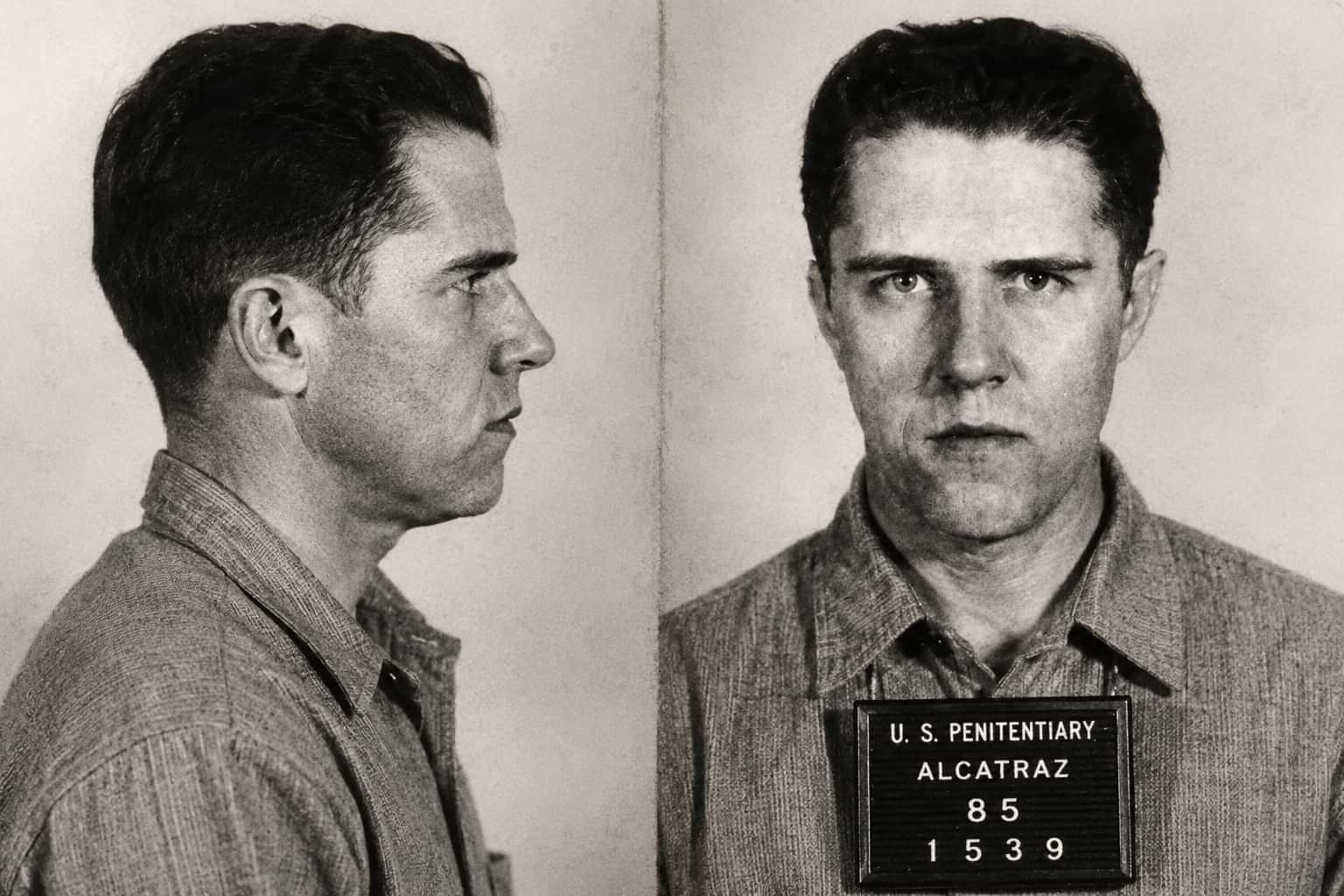
Alvin “Old Creepy” Karpis spent more time inside Alcatraz Federal Penitentiary than any other prisoner in its history. His twenty-six years on the island were not defined by a single incident or moment of conflict but by continuity, a long, uninterrupted period that reveals how the prison actually operated over time.
Most Alcatraz narratives focus on escapes, violence, or individual events. Karpis’s experience is different. It provides a sustained view of institutional control, showing how the system functioned across decades and how an inmate adjusted when there was no clear endpoint to confinement.
Why Alvin Karpis Was Sent to Alcatraz (High-Risk Profile and Federal Priority)
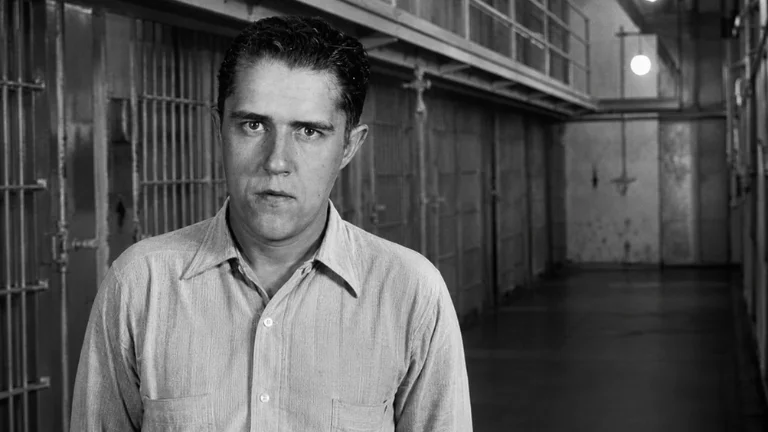
Alvin Karpis became one of the most important targets for federal law enforcement during the 1930s because of how he operated rather than how he appeared. As a central figure in the Barker–Karpis gang, he was involved in crimes that required coordination across multiple states, including bank robberies and the high-profile kidnappings of William Hamm Jr. and Edward Bremer.
What made him particularly significant was his ability to avoid capture for an extended period. He did not rely on unpredictability or visible aggression. Instead, he relied on structure, planning movements, controlling timing, and minimizing exposure. This made him difficult to track and even more difficult to anticipate.
Under J. Edgar Hoover, he was designated Public Enemy Number One, a label that concentrated federal resources on his capture and elevated the urgency of the case. When he was finally arrested in 1936, authorities did not treat him as a standard inmate. They classified him as someone capable of organizing, influencing, and potentially escaping under less restrictive conditions. This classification led directly to his transfer to Alcatraz.
Arrival at Alcatraz: Identity Removal and Environmental Control

Prisoner AZ-325 and the Elimination of Reputation
When Karpis arrived at Alcatraz Federal Penitentiary, he was assigned the identification AZ-325. This transition was more than administrative. It marked the removal of external identity.
Inside Alcatraz, reputation had no operational value. Whether an inmate had been widely feared or largely unknown, the system treated them identically. Movement, privileges, and daily routines were standardized. This uniformity was intentional, designed to prevent individuals from using status or recognition to influence others.
For Karpis, whose effectiveness outside prison had depended on control and coordination, this represented a complete shift in conditions.
The Island as a Controlled Environment
The design of Alcatraz extended beyond the buildings themselves. The island functioned as part of the system.
From within the prison, San Francisco remained visible across the bay. This created a constant visual reference to freedom. However, the surrounding water, cold, fast-moving, and difficult to navigate, made that freedom inaccessible.
This combination created a specific type of pressure. The distance appeared short, but the conditions made it effectively unreachable. Over time, this reinforced the reality of confinement not through force alone, but through environment.
Life Inside Alcatraz: Routine, Discipline, and Psychological Adjustment
Daily Structure and Institutional Control
Life at Alcatraz followed a strict and repetitive schedule. Inmates were counted multiple times a day to ensure constant accountability. Meals were taken in a central dining hall under supervision, and work assignments were mandatory.
The prison operated several internal functions, including laundry and maintenance, where inmates contributed labor. These roles were structured to occupy time while maintaining order within the institution.
Movement between areas was controlled, requiring authorization and oversight. Communication between inmates was limited, particularly during earlier years when silence rules were more strictly enforced. These restrictions were designed to prevent coordination and reduce the possibility of organized resistance.
Adapting to Long-Term Confinement
For inmates serving shorter sentences, this environment often produced frustration and resistance. For Karpis, whose sentence extended indefinitely, adaptation became the only sustainable response.
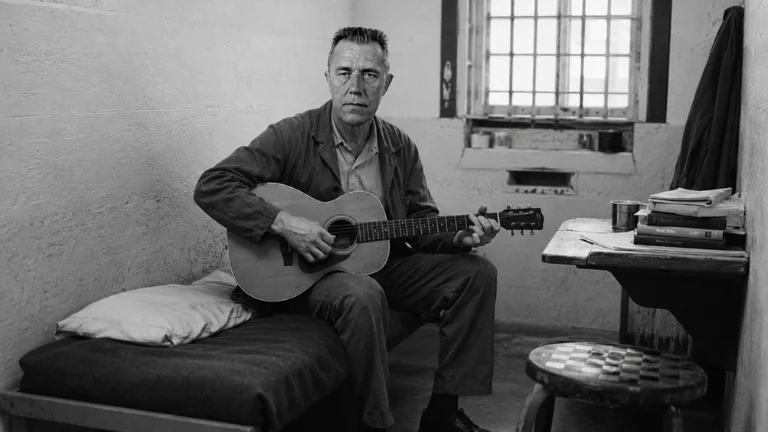
Over time, he developed a consistent internal routine that worked within the prison’s structure. He learned to play the guitar and practiced regularly, turning it into a long-term skill rather than a temporary distraction. He also read extensively, using books to create a mental structure that extended beyond the physical limits of his cell.
These activities were not casual. They functioned as tools for managing time, a critical factor in long-term imprisonment. When confinement stretches across decades, time itself becomes the central challenge.
Karpis’s ability to establish and maintain these routines allowed him to endure without repeated disciplinary conflict, something not all inmates were able to achieve.
Witnessing Key Events at Alcatraz (1936–1962)

Observing the Decline of Al Capone
During his early years at Alcatraz, Karpis observed the deterioration of Al Capone. Capone’s declining health demonstrated that influence outside prison did not translate into control inside it. Even the most recognized figures were subject to the same conditions as everyone else.
Experiencing the 1946 Battle of Alcatraz
The 1946 uprising marked one of the most significant challenges to the prison’s control. The confrontation lasted two days and required military assistance to resolve.
For Karpis, this event represented a moment where the system was tested directly. It showed that while Alcatraz was designed for control, it was not completely immune to disruption.
Interaction with Charles Manson
By the late 1950s, Karpis’s long sentence placed him among a different generation of inmates. During this period, he reportedly taught Charles Manson to play guitar.
This interaction highlights how extended confinement can create unexpected connections between individuals from different eras, linking separate periods of criminal history within the same institution.
The Final Phase: Institutional Decline and Transfer
Structural and Operational Challenges
By the late 1950s, Alcatraz faced increasing difficulties. The cost of maintaining the island prison was significantly higher than that of mainland facilities. Constant exposure to saltwater led to corrosion and structural wear, making repairs both frequent and expensive.
These challenges gradually reduced the efficiency of the institution. What had once been considered the most secure prison in the United States was becoming difficult to sustain.
Transfer Before Closure
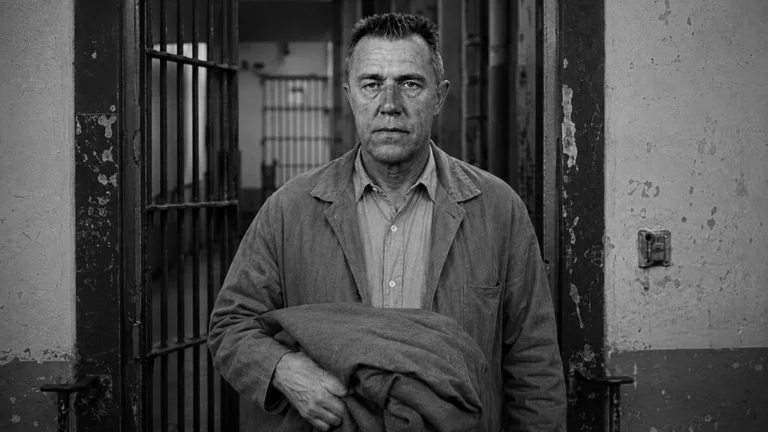
Karpis was transferred in 1962, ending his twenty-six-year stay at Alcatraz. The following year, in 1963, the prison officially closed.
This sequence is important. Karpis did not leave because his sentence ended. He left because the institution itself was reaching its end.
Life After Alcatraz: Release, Deportation, and Reflection

After more than three decades in federal custody, Karpis was released in 1969. As a Canadian citizen, he was deported immediately upon release.
He later moved to Spain, where he wrote his memoir On the Rock. The book provides one of the most detailed firsthand accounts of life inside Alcatraz, offering insight into both daily routines and long-term adaptation.
He died in 1979, having spent a significant portion of his life within the prison system.
What Alvin Karpis’s Story Reveals About Alcatraz
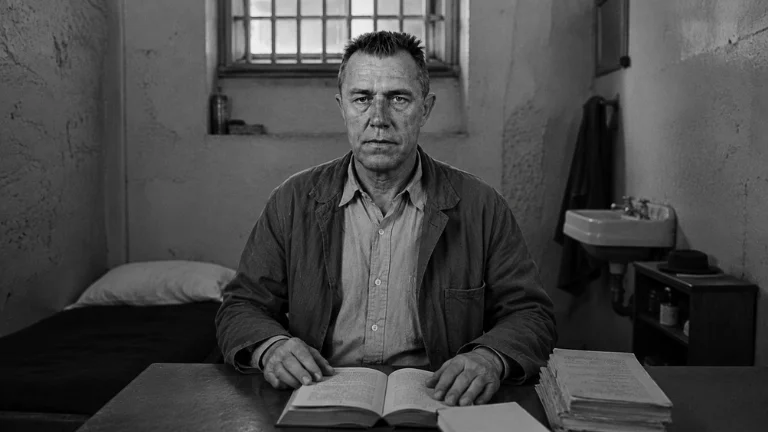
Karpis’s experience shows that Alcatraz was not only a place of confinement but also a system designed to manage individuals over extended periods.
His twenty-six years illustrate how:
Institutional structure replaces personal control
Routine becomes the primary framework for daily life
Time reshapes behavior more than force
Because of the length of his confinement, his story provides one of the most complete and continuous perspectives on how the prison functioned.
Timeline: Alvin Karpis
1907 — Born in Montreal, Canada
Late 1920s — Joins Barker–Karpis gang
1933 — William Hamm Jr. kidnapping
1934 — Edward Bremer kidnapping
1935 — Named Public Enemy Number One
1936 — Arrested → life sentence
1936 — Sent to Alcatraz Federal Penitentiary (AZ-325)
1936–1962 — 26 years at Alcatraz
1946 — Battle of Alcatraz
Late 1950s — Teaches Charles Manson guitar
1962 — Transferred
1963 — Alcatraz closes
1969 — Released and deported
1979 — Dies in Spain
How to Experience This During Your Visit

Visitors to Alcatraz Federal Penitentiary can best understand Alvin Karpis’s story by focusing on routine, structure, and time, not just events.
Inside the cellhouse, observe the uniform rows of cells and how movement is controlled. This layout reflects how identity was reduced and replaced by system-driven routines, something that becomes clear during a day tour.
Pay attention to the dining hall and work areas, where strict schedules shaped daily life. These spaces show how time was managed and controlled over long periods, a key part of Karpis’s 26 years on the island.
For deeper context, a behind-the-scenes access experience reveals additional sections of the prison, helping you understand how the institution maintained long-term control beyond the standard visitor path.
A night tour offers a more immersive perspective, where the quiet, restricted environment makes it easier to reflect on isolation, routine, and the psychological impact of extended confinement.
Final Insight: Why This Story Matters
Alvin Karpis’s story is not built around a single defining moment. It is built around duration, the experience of living within a controlled system for decades.
His time at Alcatraz shows how the prison operated in practice, not just in theory. It reveals what long-term confinement actually meant, how individuals adapted to it, and how the system itself evolved over time.
That perspective makes his story one of the most important for understanding Alcatraz as it truly was.
Frequently Asked Questions
Why was Alvin Karpis sent to Alcatraz?▾
How long did Alvin Karpis stay at Alcatraz?▾
What was Alvin Karpis known for before prison?▾
What was Alvin Karpis’s prisoner number at Alcatraz?▾
Did Alvin Karpis ever try to escape from Alcatraz?▾
What was daily life like for Alvin Karpis at Alcatraz?▾
Did Alvin Karpis interact with other famous prisoners?▾
What major events did Alvin Karpis witness at Alcatraz?▾
Why is Alvin Karpis important to Alcatraz history?▾
What happened to Alvin Karpis after leaving Alcatraz?▾
Adrian Davis
Published on Alcatraz Island Guide


