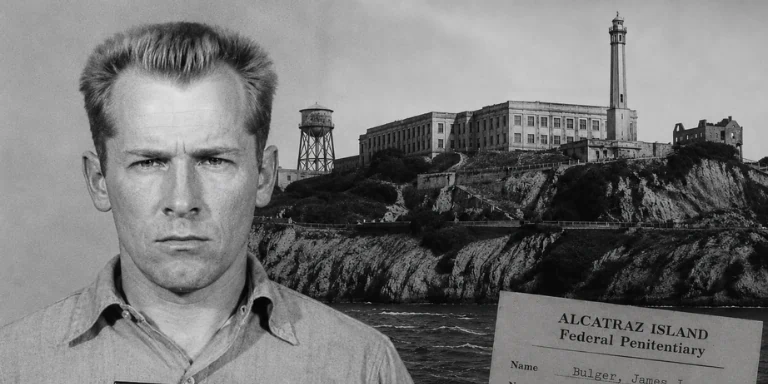
Whitey Bulger Alcatraz History: Early Prison Years Before His Rise
Before emerging as a dominant figure in Boston’s organized crime world, James Joseph Bulger Jr. spent a critical phase of his early prison years inside Alcatraz Federal Penitentiary. This period came at a time when he was still a developing criminal, not yet the powerful figure he would later become.
His time at Alcatraz reflects a transitional stage, where exposure to strict discipline, isolation, and the rigid structure of a high-security prison shaped his understanding of control, hierarchy, and survival. Unlike later chapters of his life that focus on influence and power, this phase shows him operating within a system designed to break routine, limit communication, and enforce order.
For visitors and readers, this timeline offers more than background context. It connects Bulger’s early criminal development with the physical and institutional environment of Alcatraz, helping explain how such conditions may have influenced his later approach to leadership, strategy, and authority in the criminal world.
Early Background and Criminal Development
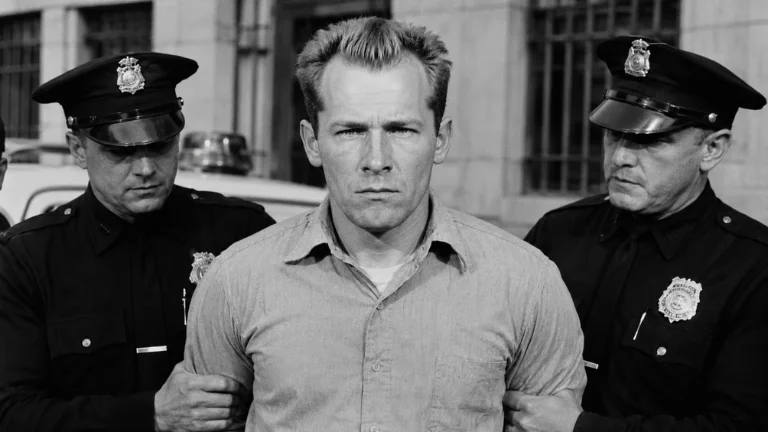
Childhood and Environment in South Boston
James Joseph Bulger Jr. was born in 1929 into a working-class Irish-American family in South Boston, an area known at the time for tight-knit communities but also rising street crime. Economic hardship, limited opportunities, and neighborhood influence played a key role in shaping early behavior.
As a teenager, Bulger became involved in petty theft and gang-related activities. These early offenses were not isolated incidents but part of a developing pattern, reinforced by peer networks and repeated contact with law enforcement.
Early Criminal Activity and First Arrests
By his late teens and early twenties, Bulger had already accumulated a record of minor offenses, including theft and assault. These early arrests introduced him to the criminal justice system and exposed him to institutional discipline at a young age.
This period is important because it reflects a transition from impulsive, low-level crime to more deliberate behavior. Instead of deterring him, early encounters with the system appeared to normalize criminal activity.
Escalation to Organized Federal Crimes
In the early to mid-1950s, Bulger’s activities became more structured and significantly more serious. He became involved in a series of bank robberies, armed thefts, and hijacking operations across multiple states.
These were not random crimes, they required planning, coordination, and a higher tolerance for risk. This shift brought him under federal jurisdiction, as such crimes crossed state lines and involved major financial institutions.
By this stage, Bulger had clearly moved beyond street-level crime into organized criminal activity, setting the foundation for his later reputation.
Conviction and Entry Into the Federal Prison System
In 1956, Bulger was convicted of multiple federal offenses and received a substantial prison sentence. This marked his formal entry into the U.S. federal prison system, a turning point that placed him within a highly structured and controlled environment.
At this time, he was not yet a major organized crime figure, but his criminal profile, combined with behavioral concerns, meant he was closely monitored. His time in federal custody exposed him to stricter discipline, inmate hierarchies, and long-term incarceration realities.
Transfers and Path Toward High-Security Confinement
Following his conviction, Bulger was moved through several federal prisons. These transfers were typically based on behavior, security classification, and institutional needs.
Each facility presented different conditions, but together they contributed to his understanding of prison systems and survival strategies within them. Over time, his record and classification led to placement in higher-security environments.
This progression ultimately resulted in his transfer to Alcatraz Federal Penitentiary, one of the most secure prisons in the United States, marking a critical stage in his incarceration and development.
Assignment to Alcatraz Federal Penitentiary
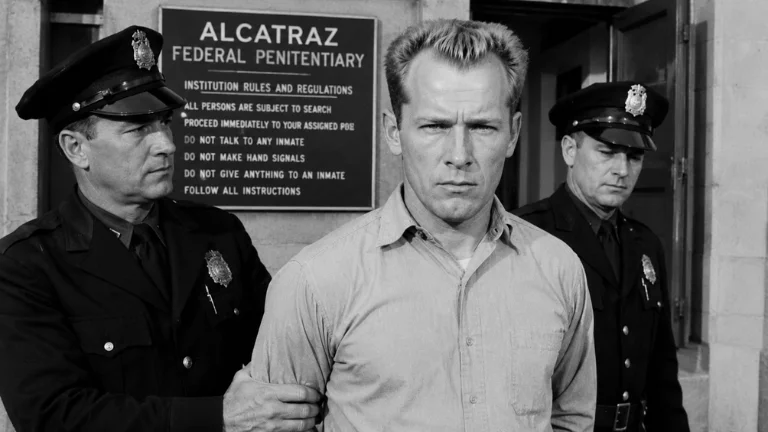
Transfer to a High-Control Facility
In 1959, Bulger was transferred to Alcatraz Federal Penitentiary from another federal prison. The facility was reserved for inmates considered difficult to manage or likely to disrupt order elsewhere.
He arrived as inmate 1428-AZ, entering a system designed to limit influence and enforce discipline through strict control rather than negotiation.
Structure and Conditions Inside the Prison
Alcatraz followed a rigid operational model where daily life was tightly controlled. Inmates lived in compact cells, followed fixed schedules, and had limited communication. The isolation of the island added another layer of restriction beyond the prison itself.
These conditions created an environment where authority came from the system, not from individual inmates, shaping how prisoners adapted to daily life.
Key Experiences During His Time at Alcatraz
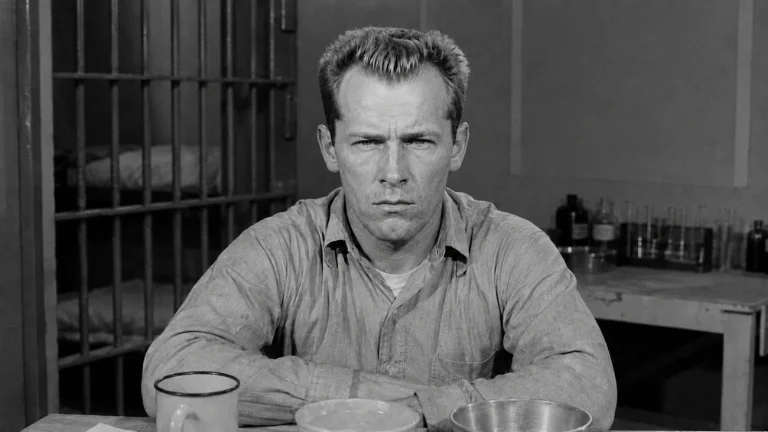
Duration and Daily Environment
Bulger remained at Alcatraz from 1959 to 1962, during the prison’s final years. Despite the facility nearing closure, its internal structure remained strict, and routines were consistently enforced.
The controlled environment emphasized discipline and routine, influencing how inmates managed time and adjusted their behavior within the system.
Participation in MKUltra Experiments
During his federal imprisonment, Bulger took part in the MKUltra program, a CIA-backed project involving LSD testing on inmates. He later described the experience as psychologically disturbing, with effects that lasted beyond his prison years.
This aspect of his time in custody highlights a lesser-known part of the prison system, where inmates were involved in programs that extended beyond standard confinement.
Exit from Alcatraz and Transition Phase
Transfer Before Closure
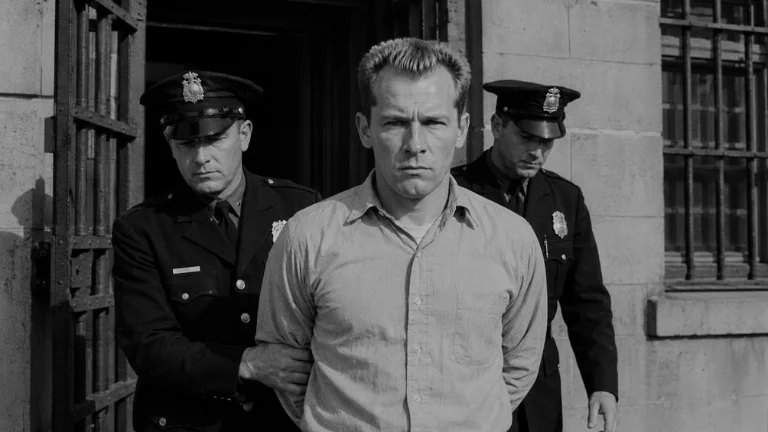
In 1962, Bulger was transferred out of Alcatraz to another federal facility. This occurred shortly before the prison closed in 1963, ending his time on the island after approximately three years.
Release and Shift in Approach
He was released from federal custody in 1965 and returned to Boston. By this point, his approach had changed, moving from direct involvement in crime to a more controlled and structured way of operating.
This transition marked the beginning of the phase that would eventually lead to his rise within organized crime.
After Release: Rise of Whitey Bulger

Return to Boston and Shift in Strategy
After leaving federal custody in 1965, Whitey Bulger returned to South Boston at a time when the local criminal landscape was active but fragmented. He did not immediately step into a leadership role. Instead, he moved carefully, focusing on building connections and understanding how power was structured in the area.
Compared to his earlier years, his approach was more controlled. Rather than relying on direct and visible actions, he began operating with patience, allowing influence to build gradually through relationships and calculated decisions.
Building Control Through the Winter Hill Gang
By the 1970s, Bulger had established himself as a central figure within the Winter Hill Gang, which controlled illegal activities such as loan sharking, gambling, and drug distribution across parts of Boston. His role was not limited to leadership; he was actively involved in maintaining authority within the organization.
What set him apart was how he balanced structure and enforcement. Operations were organized, but control was maintained through direct action when needed. This combination allowed him to expand influence while keeping internal order.
FBI Protection and Expansion of Power
A key factor in Bulger’s rise was his relationship with John Connolly, who served as his handler while he operated as an informant. This arrangement provided him with protection from investigations and advance warning of law enforcement actions.
This advantage allowed Bulger to strengthen his position while weakening rivals, creating a system where he could operate with reduced risk. Over time, this combination of protection, strategy, and enforcement made him one of the most powerful crime figures in Boston.
Fugitive Years, Arrest, and End
In 1994, after being warned about an upcoming indictment, Bulger left Boston and remained a fugitive for 16 years. During this period, he lived quietly under an assumed identity, avoiding attention rather than relying on constant movement.
He was arrested in 2011 in California, bringing an end to one of the longest fugitive runs in U.S. history. In 2013, he was convicted on multiple charges, including involvement in several murders, and sentenced to life in prison.
His life ended in 2018 when he was killed by other inmates shortly after being transferred to a federal prison facility, closing a long and complex criminal career.
Why Bulger’s Alcatraz Story Still Matters

A Phase Before Power and Influence
Whitey Bulger’s time at Alcatraz Federal Penitentiary represents a stage before his rise to power, when he was still part of the federal prison system rather than leading organized crime. This makes his story different from many other inmates associated with the island.
Most well-known Alcatraz figures were already famous when they arrived. Bulger, on the other hand, became significant later, which shifts how his presence on the island is understood.
Connecting Prison Structure to Later Outcomes
The environment at Alcatraz was built around control, routine, and limited interaction. Inmates lived within a fixed system that required adjustment rather than resistance, and this structure influenced how time was experienced inside the prison.
For Bulger, this period came before his rise in Boston, where his later approach showed more patience and control. While the prison did not create his future path, it formed part of the timeline that shaped how he operated afterward.
What This Adds to Your Visit

Looking Beyond Famous Stories
Visitors often focus on well-known inmates, but Alcatraz Federal Penitentiary also held individuals whose significance emerged later. Bulger’s story highlights that Alcatraz was not just for already famous criminals, it was part of journeys that later became historically important.
Understanding the Space With Context
The cellhouse becomes more meaningful when tied to real experiences. The small cells, strict layout, and daily routines reflect how inmates lived. Placing Bulger’s time within this setting helps visitors better understand how the prison system functioned.
How to Experience This Story During Your Visit
Explore the Cellhouse: The main cellhouse offers the clearest insight into inmate life. Walking through the corridors and viewing the cells helps connect Bulger’s time on the island to the physical environment.
Go Beyond the Standard Route: Extended or behind-the-scenes areas reveal more about how the prison operated. These sections often highlight lesser-known inmates and stories not covered in the main narrative.
Visit at Night: A night visit provides a quieter, more immersive experience. With fewer crowds and a more intense atmosphere, it becomes easier to reflect on inmate life and the realities of confinement.
Final Takeaway
Whitey Bulger’s time at Alcatraz Federal Penitentiary is not the most famous part of his story, but it fills an important gap. It shows a stage before his rise, when he was part of the same system that held many other inmates on the island.
For visitors, this adds another layer to the experience. It highlights that Alcatraz is not only about well-known events but also about the many individual paths that passed through it, some of which became significant long after leaving the island.
Frequently Asked Questions
When was Whitey Bulger imprisoned at Alcatraz?▾
What led to Whitey Bulger’s transfer to Alcatraz?▾
What was Whitey Bulger’s inmate number at Alcatraz?▾
How did Alcatraz differ from other prisons Bulger experienced?▾
Did Whitey Bulger’s time at Alcatraz influence his later criminal career?▾
Was Whitey Bulger involved in any government experiments while in prison?▾
How long did Whitey Bulger remain in federal prison after Alcatraz?▾
Why is Whitey Bulger’s Alcatraz period less discussed?▾
Can visitors learn about Whitey Bulger during an Alcatraz tour?▾
What makes Whitey Bulger’s Alcatraz story unique compared to other inmates?▾
Adrian Davis
Published on Alcatraz Island Guide


