Prisoners of Alcatraz Island and Their Stories
Alcatraz was not built for crime. It was built for control failure.Between 1934 and 1963, inmates sent here were not just dangerous in general terms.
They had already proven that standard prison systems could not manage them. Some ran criminal operations from inside prison. Others repeatedly escaped or disrupted internal order.
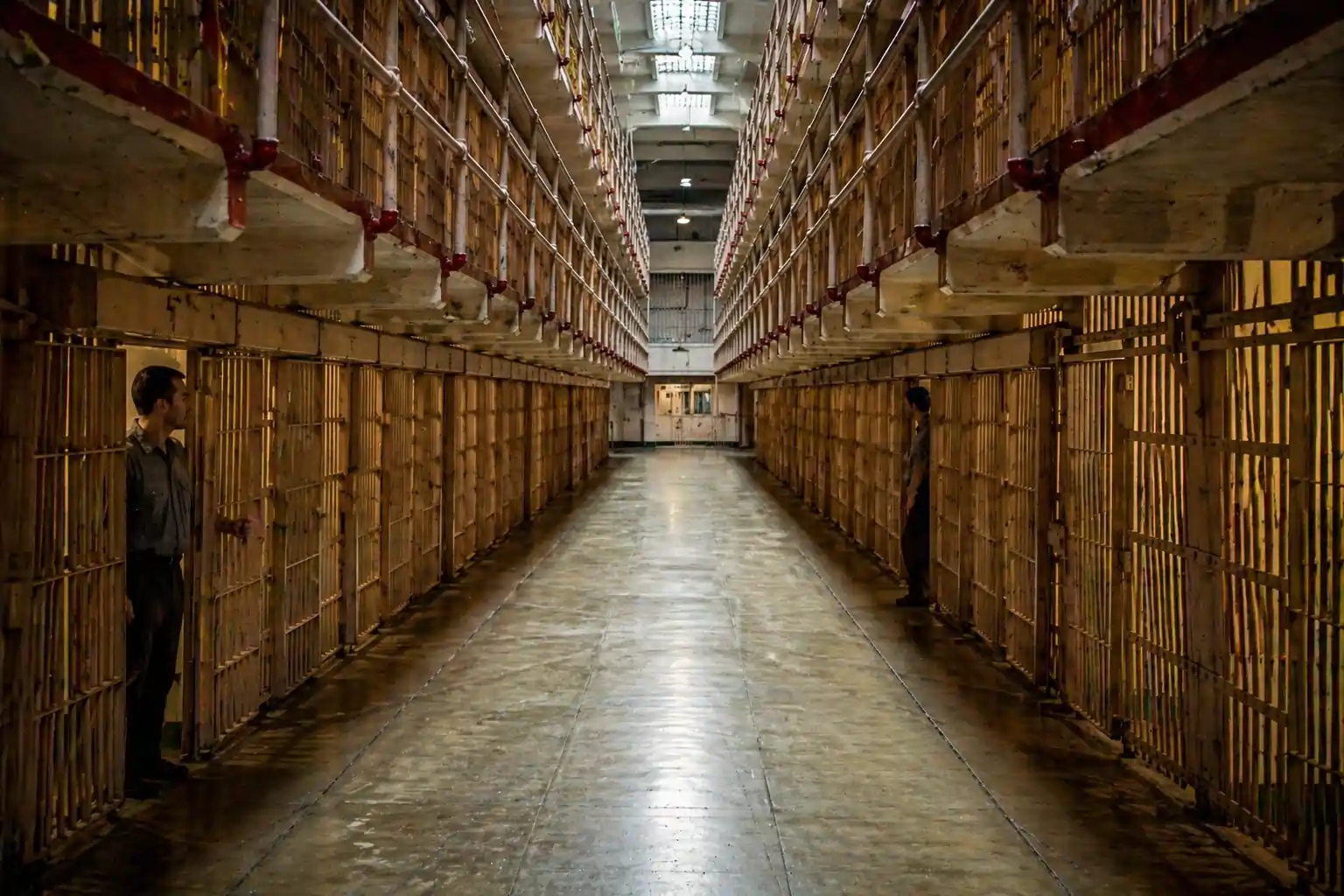
These famous prisoners of Alcatraz Island define how the prison worked in practice.When you visit, the experience is not abstract.
The cellhouse layout, the audio tour, and even the movement through corridors are tied directly to how these inmates were handled.
1. Al Capone (Inmate AZ-85 | Arrived 1934)

When Al Capone arrived at Alcatraz in August 1934, he was already one of the most powerful and recognizable criminals in the United States. His empire in Chicago had survived years of law enforcement pressure, and even in prison, he had managed to maintain influence through bribery and connections.
At Atlanta Federal Penitentiary, Capone’s imprisonment was far from restrictive. He had access to privileges, communication channels, and a network that still operated beyond prison walls. This is exactly what Alcatraz was built to eliminate.The moment he stepped onto the island, everything changed.
There were no special accommodations, no backdoor deals, and no recognition of status. Capone was treated like every other inmate. His daily life became repetitive and controlled, assigned to laundry duty, monitored constantly, and cut off from any meaningful external contact. For someone who once controlled entire criminal operations, this loss of power was more significant than the imprisonment itself.
Over time, his health began to collapse. Years of untreated neurosyphilis started affecting his cognitive abilities, memory, and physical condition. By the time he was transferred out in 1939, he was no longer the same man who had entered Alcatraz.
Key Facts & Prison System Context:
Among the first group of inmates (1934 intake) at Alcatraz
Assigned inmate number AZ-85
Transferred to stop prison corruption and outside influence
Worked in laundry services under strict supervision
No access to privileges despite high-profile status
Suffered from neurosyphilis, leading to mental decline
Transferred out in 1939 due to deteriorating health
Why This Story Matters:
Capone’s time at Alcatraz shows how the prison was designed to break systems of power, not just punish crime. His story is one of control being completely removed.
2. Robert Stroud (Inmate AZ-594 | Arrived 1942)

Robert Stroud’s reputation followed him long before he arrived at Alcatraz. Known as the “Birdman” due to his work with canaries at Leavenworth, he had built an intellectual identity inside prison, studying diseases, writing books, and becoming something rare: a prisoner with purpose.
But Alcatraz did not allow inmates to carry identity with them.
When Stroud was transferred in 1942, the environment he entered was fundamentally different. There were no birds, no research materials, and no intellectual projects. Everything that had defined him was removed immediately.
Instead of being placed in a standard cellblock environment, Stroud spent most of his time in the hospital wing under controlled conditions. His movement was restricted, his interactions limited, and his daily life reduced to routine and observation.
This wasn’t accidental, it was policy.
Alcatraz operated on the principle that individual identity could lead to autonomy, and autonomy could lead to control. So it eliminated both.
Stroud spent 17 years on the island under these conditions, and by the time he left, the man known for scientific curiosity had been reduced to a controlled inmate within a rigid system.
Key Facts & Prison System Context:
Arrived at Alcatraz in 1942 after decades in prison
Assigned inmate number AZ-594
Previously conducted bird research at Leavenworth
Housed mainly in the hospital wing
All intellectual activities strictly prohibited
Spent 17 years under controlled isolation conditions
Transferred out in 1959 to a medical facility
Why This Story Matters:
Stroud’s experience reflects how Alcatraz removed not just freedom, but identity, purpose, and individuality.
3. Machine Gun Kelly (Inmate AZ-117 | Arrived 1934)
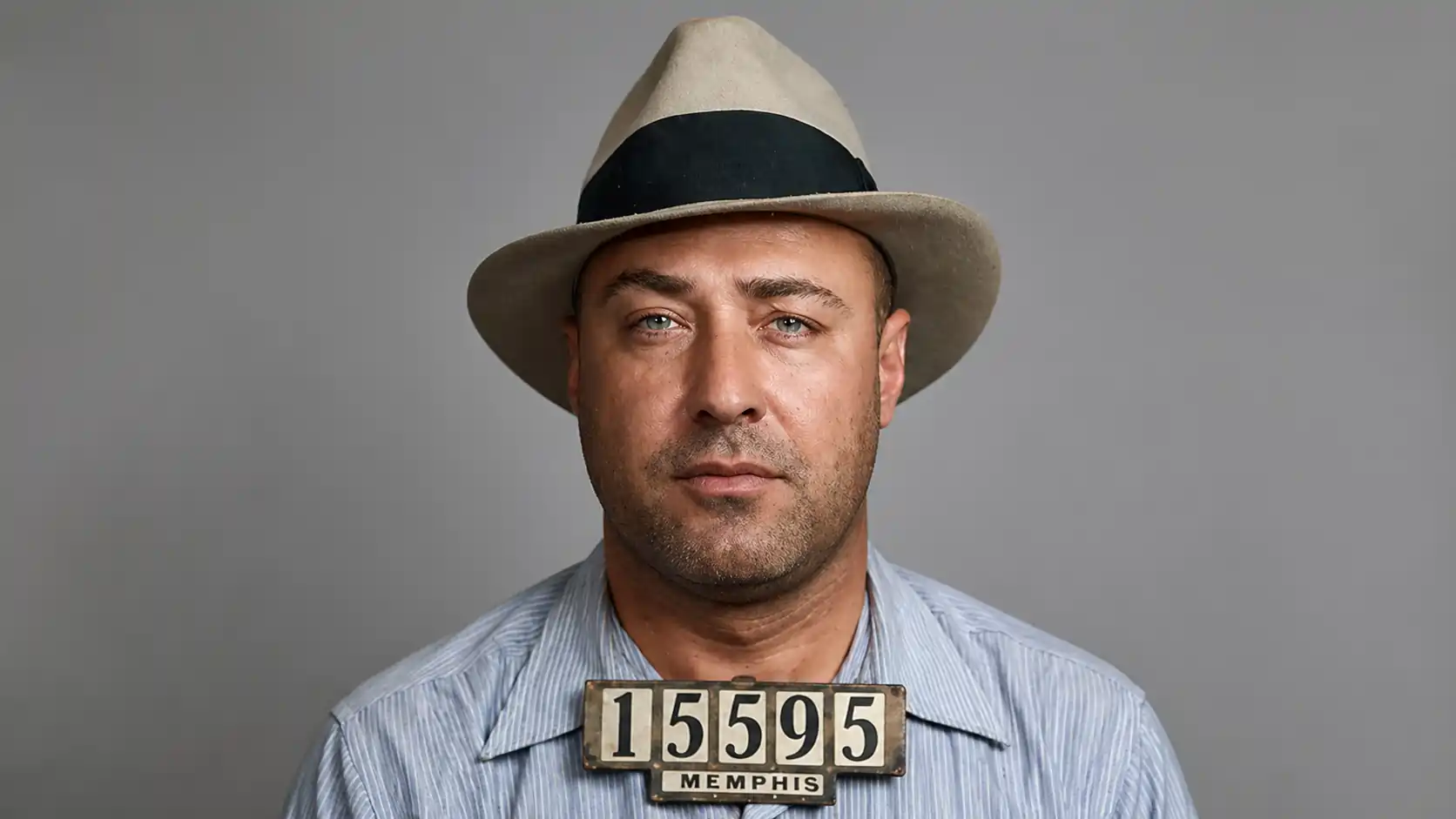
George “Machine Gun” Kelly entered Alcatraz with a reputation that had been amplified by media, law enforcement, and public fear. Known for his involvement in the kidnapping of Charles Urschel, he was portrayed as one of the most dangerous gangsters of his time.
But inside Alcatraz, reputation meant nothing.
The system did not respond to who you were outside, it responded to how you behaved inside.
Kelly understood this quickly. Instead of resisting the system, he adapted to it. He followed rules, avoided conflict, and maintained discipline in his daily routine. Over time, he became known not as a dangerous criminal, but as one of the most compliant inmates in the prison.
This transformation wasn’t forced, it was strategic. In a system where behavior determined everything, adaptation became survival.
Unlike many others, Kelly never attempted escape, never challenged authority, and never tried to rebuild influence. He accepted the structure and operated within it.
Key Facts & Prison System Context:
Arrived in 1934, early intake group
Assigned inmate number AZ-117
Convicted for kidnapping Charles Urschel
Maintained a clean disciplinary record
Known for being cooperative and rule-following
Did not attempt escape during his sentence
Why This Story Matters:
Kelly’s story shows that Alcatraz wasn’t just about control—it was about behavioral restructuring. The system reshaped inmates who chose to adapt.
4. Alvin Karpis (Inmate AZ-325 | Arrived 1936)
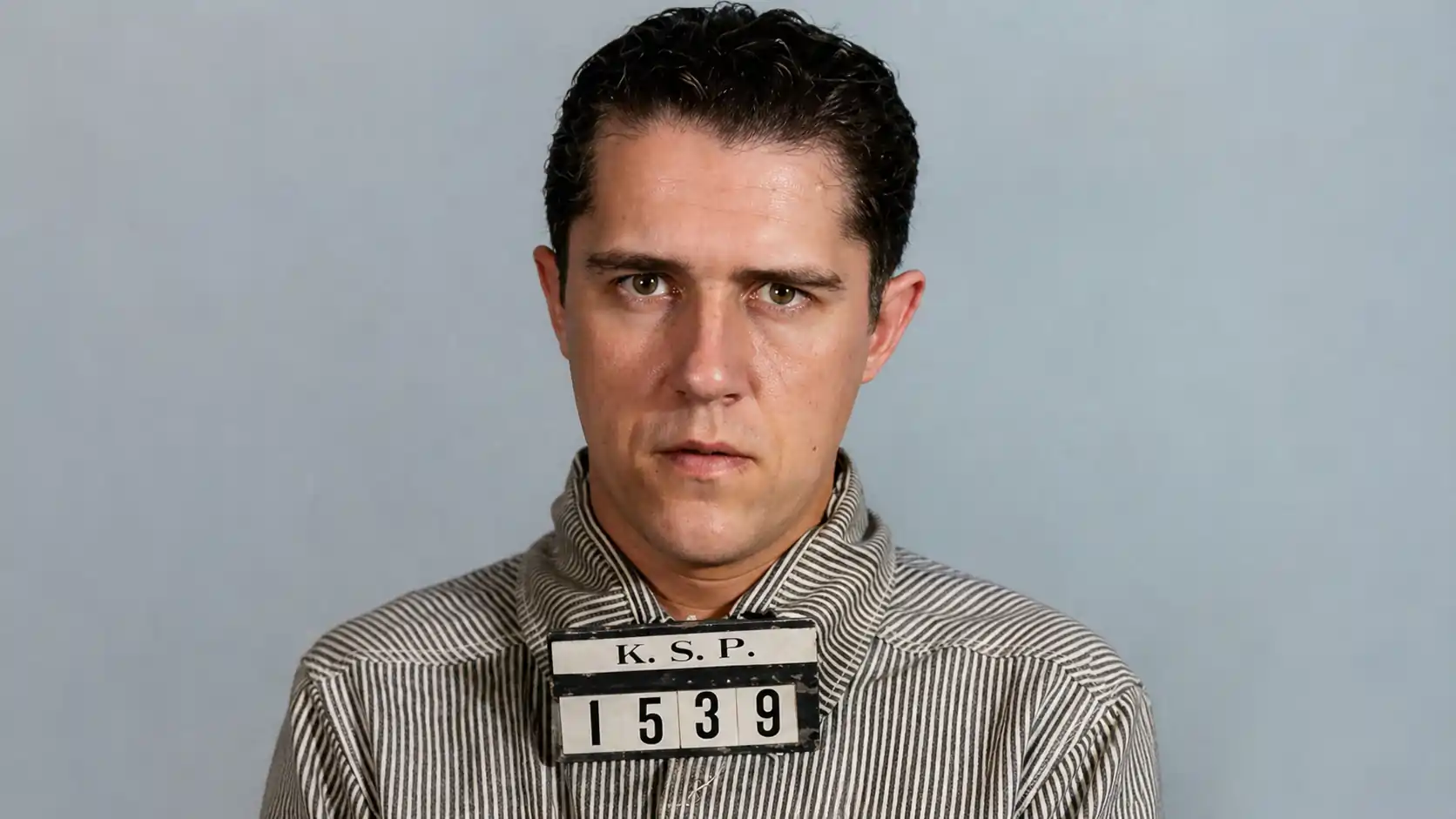
Alvin Karpis was not just another criminal, he was a strategist. As a leading member of the Barker-Karpis gang, he was involved in some of the most complex kidnappings and robberies of the 1930s. His ability to plan, coordinate, and execute operations made him particularly dangerous.
That’s why he ended up at Alcatraz.
Unlike inmates who were disruptive or violent, Karpis represented a different kind of threat, intelligence combined with criminal experience. Alcatraz was one of the few places designed to contain that.
What makes Karpis unique is not just who he was, but how long he stayed.
He spent 26 years on the island, the longest recorded stay in Alcatraz history. During that time, he maintained a stable behavioral record, avoided major conflict, and adapted to the system without resistance.
Over the years, he participated in structured prison life and reportedly even helped other inmates learn basic skills, including music.
His story is not about transformation like Kelly, or decline like Capone. It is about endurance.
Key Facts & Prison System Context:
Arrived in 1936 as Public Enemy No. 1
Assigned inmate number AZ-325
Member of the Barker-Karpis gang
Served 26 years (longest in Alcatraz history)
Maintained consistent, controlled behavior
Participated in structured inmate activities
Released in 1962, shortly before prison closure
Why This Story Matters:
Karpis represents Alcatraz’s role as a long-term containment system, built to hold individuals who could not be managed anywhere else.
5. Arthur “Doc” Barker (Inmate AZ-268 | Arrived 1935)

Arthur “Doc” Barker arrived at Alcatraz already marked as a high escape risk. As a core member of the Barker-Karpis gang, he had a history of organized crime and a strong willingness to resist confinement. Unlike inmates who adapted to Alcatraz’s structure, Barker remained focused on one objective, escape.
In January 1939, that objective turned into action.
Barker, along with several inmates, executed one of the most serious escape attempts in Alcatraz history. This was not a simple or impulsive move. The group managed to break through internal barriers, navigate beyond the cellhouse, and reach the outer industrial areas of the island. From there, they pushed toward the shoreline, something very few inmates ever achieved.
For a brief moment, the escape attempt moved beyond theory and into reality.
However, Alcatraz was designed with layered defense systems. As soon as guards detected the breach, armed response protocols were activated. Watchtower guards opened fire when Barker and the others approached the water.
Barker was shot near the shoreline and later died from his injuries.
His attempt demonstrated something critical: escaping Alcatraz wasn’t just about leaving a cell, it required overcoming multiple physical, environmental, and armed security layers.
Key Facts & Escape Context:
Arrived in 1935, classified as high escape risk
Assigned inmate number AZ-268
Member of the Barker-Karpis gang
Participated in January 1939 escape attempt
Reached outer perimeter near shoreline
Shot by guards during attempted escape
Died shortly after due to injuries
Why This Story Matters:
Barker’s case proves that escape attempts at Alcatraz were real and reached advanced stages, but the prison’s multi-layered security system was built to stop them at the final point.
6. Frank Morris (Inmate AZ-1441 | Arrived 1960)

Frank Morris is central to the most famous escape in Alcatraz history, not because of force, but because of intelligence.
Before arriving in 1960, Morris had already escaped from other prisons, including Louisiana State Penitentiary. What made him different was not just his record, but his ability to observe, plan, and execute over long periods.
At Alcatraz, he did not rush.
Instead, he studied his environment. Inside his cell, Morris noticed that the concrete surrounding the ventilation opening had weakened over time due to moisture and salt exposure. Where others saw a wall, he saw an opportunity.
Using improvised tools, including a modified vacuum cleaner motor, he slowly expanded the opening behind his cell. This process took months and required precision, patience, and consistency.
He also understood one key rule of Alcatraz: avoid attention at all costs.
Morris maintained a low profile, followed routines, and avoided disciplinary action. This allowed him to work undetected.
His escape was not a moment, it was a process built over time.
Key Facts & Escape Strategy:
Arrived in 1960, classified as high-risk escapee
Assigned inmate number AZ-1441
Known for high intelligence (above-average IQ)
Identified structural weakness in ventilation system
Used improvised tools to widen openings
Planned escape over several months
Maintained low profile to avoid suspicion
Why This Story Matters:
Morris represents a different kind of threat, strategic intelligence. His story shows how even the most secure systems can be studied and challenged over time.
7. John & Clarence Anglin (Inmates AZ-1476 & AZ-1485 | Arrived 1961)

John and Clarence Anglin were not the masterminds of the 1962 escape, but without them, it would not have succeeded.
The brothers had a history of escape attempts in other prisons, which led to their transfer to Alcatraz in 1961. Once there, they were placed in cells near Frank Morris, creating the conditions for collaboration.
What followed was one of the most carefully coordinated prison escapes ever attempted.
Over several months, the Anglin brothers worked alongside Morris to widen the ventilation openings in their cells. But their most critical contribution came in deception.
They created realistic dummy heads using soap, paper, and real human hair collected from the prison barbershop. These were placed on their beds to fool guards during nightly checks, buying them crucial time.
After exiting their cells, they moved through a hidden service corridor behind the cellhouse, climbed to an upper utility area, and eventually reached the roof.
From there, they accessed the shoreline and launched a makeshift raft constructed from stitched raincoats.
Then, they disappeared.
No confirmed evidence has ever proven whether they survived or died in the waters of San Francisco Bay.
Key Facts & Escape Execution:
Arrived in 1961 after multiple escape attempts
Assigned inmate numbers AZ-1476 & AZ-1485
Worked in coordination with Frank Morris
Created dummy heads to delay detection
Escaped through service corridors and utility routes
Built raft using raincoats as flotation material
Escape date: June 1962
Fate remains unknown (unsolved mystery)
Why This Story Matters:
The Anglin brothers’ role highlights the importance of team coordination and execution precision. Their escape remains one of the greatest unsolved mysteries in prison history.
8. Henri Young (Inmate AZ-224 | Arrived Late 1930s)

Henri Young’s story is one of the darkest chapters in Alcatraz history, not because of escape, but because of what happened after.
Unlike many inmates, Young was not a major criminal figure. He was convicted of a relatively minor offense during the Great Depression. However, after attempting escape, he was subjected to one of the harshest punishments available inside the prison.
He was placed in solitary confinement, deep underground, in isolation cells beneath the main structure.
These were not standard cells. They were cold, dark, and designed for total sensory deprivation.
Young remained there for an extended period.
When he was eventually returned to the general population, he was no longer mentally stable. Shortly after, he killed another inmate.
During his trial, his defense argued that the conditions he endured in Alcatraz had caused severe psychological damage. The court partially accepted this argument, reducing the severity of his charges.
This case brought national attention to the psychological impact of extreme isolation.
Key Facts & Psychological Impact:
Convicted for a minor federal crime
Assigned inmate number AZ-224
Attempted escape led to extended solitary confinement
Held in underground isolation cells
Suffered mental and physical deterioration
Killed another inmate after release from isolation
Court acknowledged impact of prison conditions
Why This Story Matters:
Young’s case exposed the human cost of extreme prison control, raising questions about the limits of punishment and isolation.
9. Mickey Cohen (Inmate AZ-1518 | Arrived 1961)
Mickey Cohen entered Alcatraz as a well-known figure in organized crime, particularly in Los Angeles. Like Al Capone, he was convicted of tax evasion rather than violent crime, but his real significance came from his influence, connections, and public visibility.
Outside prison, Cohen operated with power and recognition.
Inside Alcatraz, that meant nothing.
He was treated the same as every other inmate, no special privileges, no protection, and no recognition of status. However, unlike some others, Cohen’s visibility may have made him a target.
During his time on the island, he was attacked by another inmate using a lead pipe. The assault caused serious head injuries and long-term neurological effects.
This incident revealed an important reality: while Alcatraz eliminated external hierarchy, it did not eliminate internal danger.
The prison was controlled, but not safe.
Key Facts & Prison Reality:
Arrived in 1961
Assigned inmate number AZ-1518
Convicted of tax evasion
Known for organized crime influence in Los Angeles
Treated equally under prison rules
Attacked by inmate with lead pipe
Suffered serious head trauma
Why This Story Matters:
Cohen’s experience shows that Alcatraz removed power structures, but still remained a volatile and dangerous environment inside.
Why This Section Matters for Your Visit
These inmates represent the two biggest pressures on Alcatraz:
System pressure (escape attempts like Morris and the Anglins)
Internal pressure (cases like Henri Young and inmate violence)
The prison was constantly balancing both.
When you walk through the cellhouse, you are seeing a structure that was tested repeatedly by real inmates.
That’s what gives the visit weight.
What You Can Actually See During Your Visit
The stories of these inmates are not separate from the site. They are built into how the visit is structured.
Inside the cellhouse:
The original prison cells are preserved
Vent openings used in escape attempts are still visible
Isolation areas reflect how punishment was enforced
Corridors and layouts remain unchanged from the prison era
The audio tour connects specific inmates to exact locations. You are not just hearing stories. You are standing where those events happened.
How These Prisoners Shape Your Tour Experience
Every major part of the visit is influenced by the types of inmates Alcatraz held.
When you move through the prison:
Cells reflect controlled daily routines
Isolation areas show how discipline was enforced
Structural details explain how escape attempts were possible
This is why understanding these inmates before your visit makes a difference.
Without context, it feels like a walkthrough.
With context, it becomes a system you can read.
Choosing the Right Tour Based on What You Want to See
Your experience changes depending on how you visit the island.
If your goal is to understand the full structure of the prison, the Alcatraz Day Tour gives you enough time to move through each section and connect stories with locations.
If you want a more controlled and quieter environment, the Alcatraz Night Tour changes how the same spaces feel. The reduced crowd and lighting shift the focus more toward atmosphere.
If you are interested in areas not included in the standard route, the Alcatraz Behind the Scenes Tour provides access to restricted sections that add more operational context.
The difference is not just timing. It’s how much detail you can access.
Final Takeaway
Alcatraz is not just a historic prison. It is a system built around very specific types of inmates.
These prisoners:
Tested the limits of prison control
Forced the system to adapt
Defined how the prison operated
When you visit, you are not just looking at cells. You are seeing how that system worked under real pressure.
If you understand the inmates before you go, the experience becomes clearer, more structured, and more meaningful.
Adrian Davis
Published on Alcatraz Island Guide


