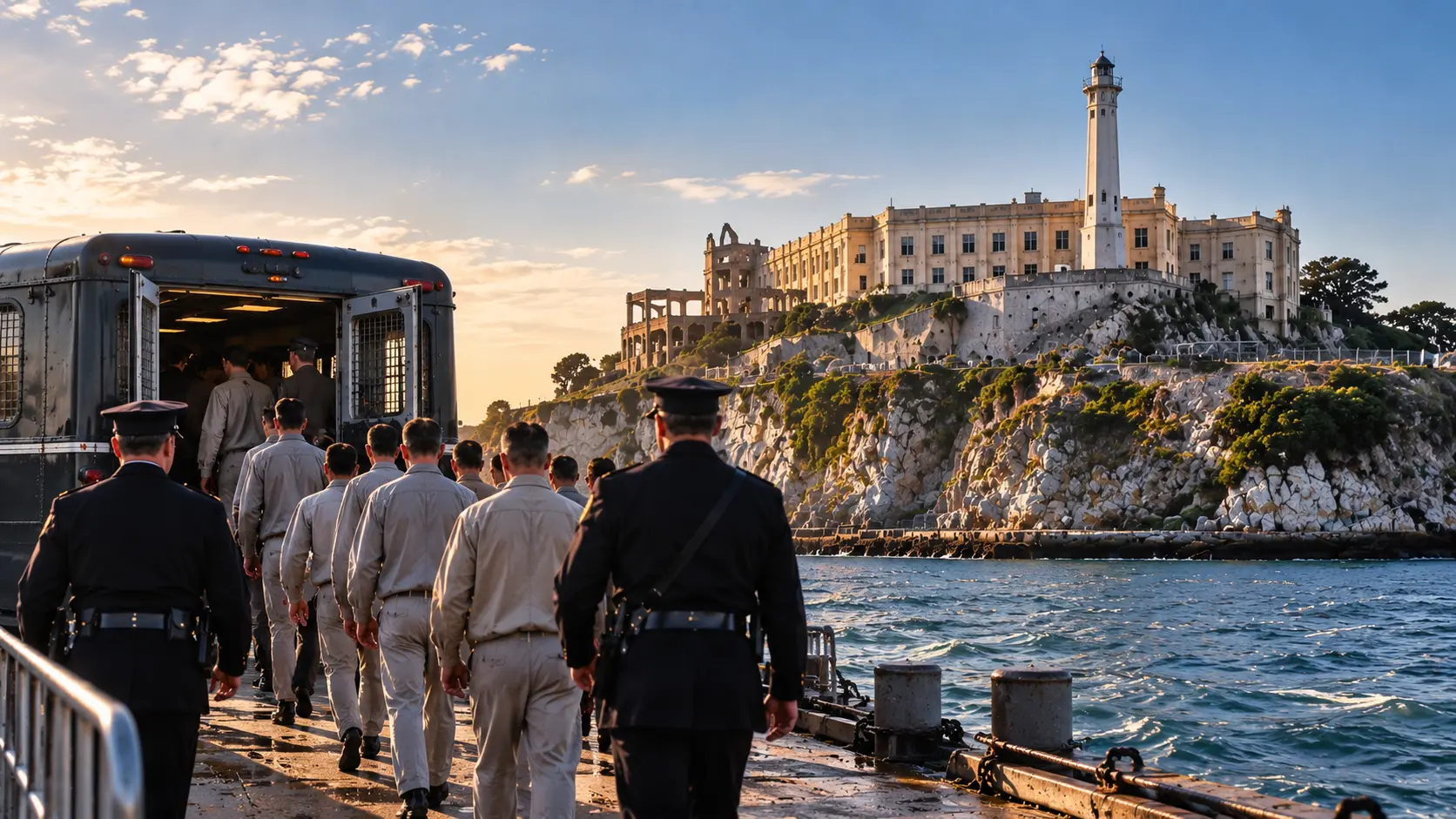
Where Did Alcatraz Prisoners Go When It Closed?
Alcatraz Island is one of the most fascinating historic destinations in San Francisco. Known for its cold waters, imposing prison walls, and stories of daring escape attempts, the island once housed some of America's most notorious criminals. But when the famous federal penitentiary closed in 1963, an important question remained: where did Alcatraz prisoners go when it closed?
The answer reveals an interesting chapter in American prison history. Most inmates who remained in custody were transferred to other federal prisons across the country. Their departure marked the end of Alcatraz's years as a working penitentiary, but it did not mean their prison sentences were over.
If you're planning to visit Alcatraz Island, understanding what happened when the prison closed adds another layer of meaning to the cells, corridors, and historic buildings you'll encounter during your tour. Exploring available Alcatraz tour tickets can help you plan your visit and experience the island's fascinating history firsthand.
Why Did Alcatraz Prison Close in 1963?
Alcatraz Federal Penitentiary officially closed on March 21, 1963. Despite its reputation as one of America's toughest prisons, the main reason for its closure was not an escape or a security failure. The decision was largely driven by operating costs and the deteriorating condition of the facility.
Life on an island created significant logistical challenges. Food, fresh water, fuel, and other essential supplies had to be transported across San Francisco Bay. Maintaining the buildings was also becoming increasingly expensive because salt air and the coastal environment had damaged parts of the prison.
Federal officials determined that repairing and operating Alcatraz was no longer financially practical. Closing the facility and transferring its remaining inmates to other institutions became the preferred solution.
For a prison famous for keeping people isolated from the mainland, the end came not through a dramatic escape, but through a practical decision about money and maintenance. Visitors can explore the former penitentiary and learn more about its history by planning an Alcatraz day trip.
Where Did Alcatraz Prisoners Go When It Closed?
Most prisoners who were still serving their sentences were transferred to other federal correctional institutions. Rather than sending everyone to one replacement prison, officials distributed inmates among several facilities according to their individual circumstances and custody requirements.
The final transfers included prisoners sent to institutions such as:
United States Penitentiary, Leavenworth, Kansas: An established federal penitentiary that housed inmates serving serious sentences.
United States Penitentiary, Lewisburg, Pennsylvania: Another federal institution that received prisoners as part of the broader transfer process.
United States Penitentiary, Atlanta, Georgia: A long-standing federal prison that housed inmates under federal custody.
McNeil Island, Washington: A correctional facility that was also associated with the final movement of Alcatraz inmates.
The precise destination depended on the prisoner and the arrangements made by federal authorities. These institutions were part of the wider federal prison system, allowing the government to continue holding inmates without maintaining an isolated penitentiary in San Francisco Bay.
One detail is worth remembering: Alcatraz's closure did not automatically release its prisoners. For most inmates, the journey away from the island simply meant continuing their sentences somewhere else.
The prison's former cells, corridors, and restricted spaces help visitors understand the conditions inmates experienced. To learn more about the prison's interior and historic spaces, explore Alcatraz Island inside.
Were All Alcatraz Prisoners Moved on the Same Day?
No. The closure was the culmination of a transfer process, not a single event in which every prisoner suddenly left the island.
In the final shutdown period, the remaining group included 27 inmates who were transferred as Alcatraz ceased operations. Other prisoners had already been moved or released before the official closing date.
This distinction matters because Alcatraz housed hundreds of inmates over the years. The 27 prisoners associated with the final transfers were only a small part of the institution's much longer history.
Imagine living on an isolated island for years, following the same strict routines and hearing the waters of the bay beyond the prison walls. Leaving Alcatraz might have felt like the beginning of something new. Yet the destination was often another secure institution, with new surroundings but many of the same restrictions.
Today, the island offers visitors an opportunity to explore these stories beyond the written record. Walking through the historic grounds provides a sense of the isolation that shaped daily life and helps explain why Alcatraz remains such a compelling part of American prison history.
What Happened to Alcatraz's Most Famous Prisoners?
Alcatraz became famous partly because of the criminals held there. However, several well-known inmates had left the island long before its final closure.
Al Capone
Al Capone, the notorious Chicago gangster, was transferred away from Alcatraz in 1939. He was later released from federal custody and died in 1947, years before the penitentiary closed.
George “Machine Gun” Kelly
George Kelly was transferred from Alcatraz in 1951. He remained in federal custody and died in 1954.
Robert Stroud, the Birdman of Alcatraz
Robert Stroud became famous through books and films inspired by his life. Despite his nickname, he was not known for keeping birds at Alcatraz. He was transferred to the Medical Center for Federal Prisoners in Springfield, Missouri, in 1959 and died in 1963.
Their stories illustrate why it's important to distinguish between the histories of individual prisoners and the final transfers that took place when Alcatraz shut down.
For visitors interested in experiencing the island in a different atmosphere, an Alcatraz night tour offers another way to explore the former penitentiary and learn about its past.
Did Anyone Escape From Alcatraz Before It Closed?
Yes. One of the most famous escape attempts occurred in June 1962, when Frank Morris and brothers John and Clarence Anglin disappeared from their cells.
Investigators believed the men had used improvised tools to enlarge openings around their cell vents and left dummy heads in their beds to delay detection. Whether they survived the escape remains unconfirmed, making the case one of Alcatraz's most enduring mysteries.
The escape happened about nine months before the prison closed. Although it added to the island's reputation, the closure was primarily the result of high operating costs and deteriorating infrastructure.
Today, visitors can learn about the escape attempt while exploring the former cellhouse and hearing stories about the people who lived behind its walls. Seeing the historic prison spaces in person adds context to the escape story and helps explain why the mystery continues to fascinate visitors.
What Happened to Alcatraz Island After the Prison Closed?
Alcatraz's history did not end when the last prisoners departed.
In 1964, Native American activists briefly occupied the island. A larger occupation began in November 1969 and continued until June 1971, drawing national attention to Indigenous rights, sovereignty, and federal policies affecting Native American communities.
In 1972, Alcatraz became part of the Golden Gate National Recreation Area. Today, the National Park Service manages the island as a historic destination, welcoming visitors interested in its military past, federal penitentiary years, and Indigenous history.
The surrounding waters are also a major part of the island's appeal. Travelers who want to experience the waterfront from a different perspective can consider a San Francisco Bay cruise, enjoying views of the bay and the San Francisco skyline while appreciating the region's maritime setting.
Walking through the former cellhouse offers a very different experience from the one prisoners knew. The cells, exercise yard, and surrounding bay provide a sense of the isolation that shaped daily life on the island.
For history lovers, Alcatraz is more than a famous former prison. It is a place where stories of crime, punishment, escape, and the struggle for freedom intersect.
What Can You See When Visiting Alcatraz Today?
If you're planning an Alcatraz visit, the island offers several opportunities to explore its history. From the former prison buildings to the surrounding waterfront, there's plenty to discover during a visit.
The cellhouse: See the rows of cells where federal prisoners lived and learn about the prison's daily routines.
The audio tour: Listen to accounts from former inmates and correctional officers that bring the prison's past to life.
The recreation yard: Discover where prisoners spent limited time outside their cells.
Historic island buildings: Explore surviving structures that reflect Alcatraz's earlier military and penitentiary periods.
Scenic viewpoints: Take in views of San Francisco, the Golden Gate Bridge, and the surrounding bay.
The island is an excellent destination for travelers interested in American history, architecture, and stories of crime and punishment. Exploring its buildings and grounds provides a better understanding of how the penitentiary operated and why it became one of the country's most famous prisons.
Travelers who want to discover more of the region's history can also consider an Alcatraz & Angel Island tour. Visiting both islands offers an opportunity to learn about the area's broader military, immigration, and cultural heritage.
Booking ahead is a sensible idea, particularly during busy travel periods. Before your visit, check current ferry schedules, ticket details, and access information through the relevant booking service and the National Park Service.
You can also extend your San Francisco sightseeing beyond the island itself. The waterfront, city skyline, and surrounding bay provide plenty of opportunities to appreciate the area's scenery, especially if you have additional time in your itinerary.
Final Thoughts
So, where did Alcatraz prisoners go when it closed? Most of the inmates who remained in custody were transferred to other federal prisons across the United States, while those whose sentences or legal circumstances allowed release followed different paths.
The closure on March 21, 1963, brought an end to Alcatraz's role as a federal penitentiary, but it did not erase the stories left behind. From famous inmates and attempted escapes to the island's transformation into a historic attraction, Alcatraz continues to capture the imagination of visitors from around the world.
When you visit the island today, you're stepping into more than an abandoned prison. You're exploring a place shaped by difficult human stories, changing ideas about justice, and a remarkable history that extends far beyond its prison walls.
Whether you're interested in the prison's history, its famous escape attempts, or the views across San Francisco Bay, planning ahead can help you make the most of your visit. If you'd like to round out your sightseeing with views of the waterfront at the end of the day, a San Francisco sunset cruise can be a memorable addition to your San Francisco itinerary.
Frequently Asked Questions
Where did Alcatraz prisoners go when it closed in 1963?▾
How many prisoners were transferred when Alcatraz closed?▾
Were Alcatraz prisoners released when the prison closed?▾
Why was Alcatraz so difficult to escape from?▾
Can you visit Alcatraz Island today?▾
Adrian Davis
Published on Alcatraz Island Guide


