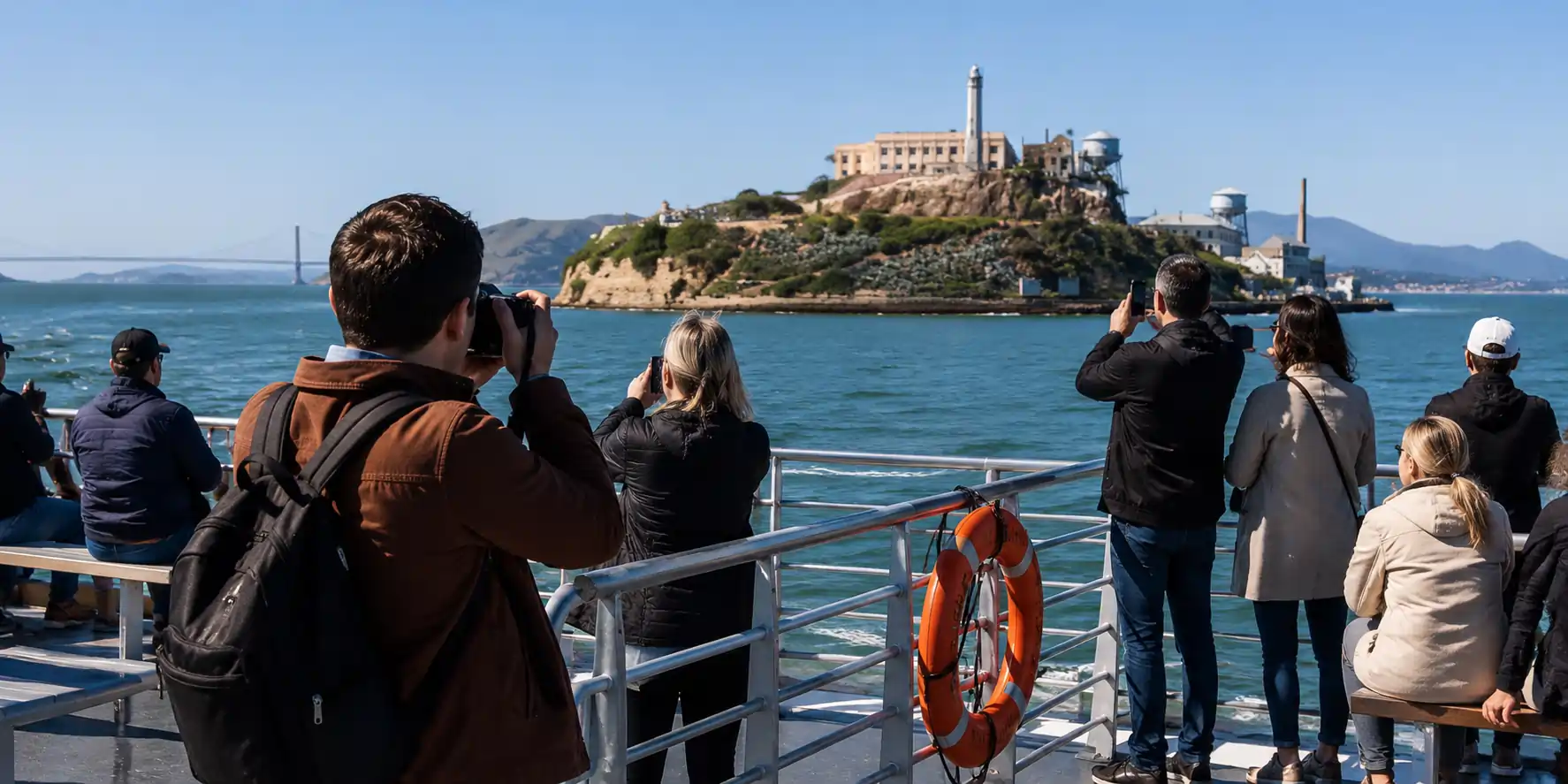
Photography Tips for Alcatraz Island Ideal for Photography
Why Alcatraz Produces Strong Photos
Alcatraz works well for photography because it combines structure and unpredictability. The island gives you controlled architectural patterns inside the prison and constantly changing natural conditions outside.
The distance from San Francisco is close enough to keep the skyline visually strong in your frame (around 2 km), but far enough to create separation. This balance is difficult to achieve in most locations.
Inside the cellhouse, repetition dominates the scene. Outside, the environment changes based on light, fog, and time of day. That contrast is what makes the island consistently rewarding to shoot.
Understanding Light Before You Shoot
Morning Light Inside the Cellhouse
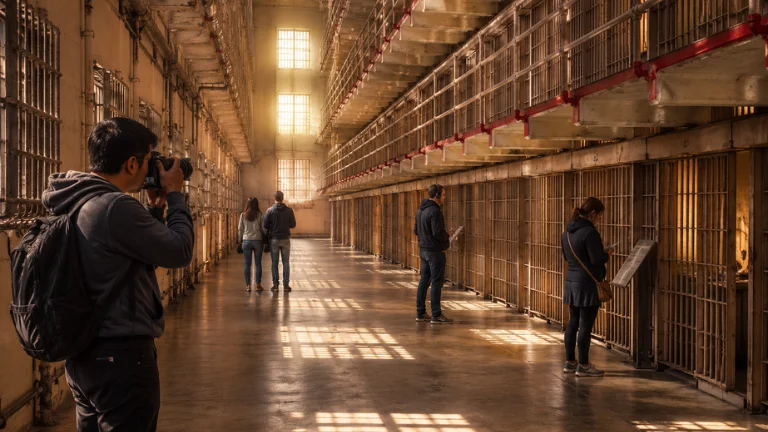
Morning is the most reliable time to photograph interiors.
Light enters through windows at a lower angle, which creates depth across corridors. Instead of flat illumination, you get directional light that highlights bars, railings, and textures.
If you arrive on an early Alcatraz day tour, you also avoid crowd buildup. This gives you more time to work compositions without interruptions.
The first hour on the island is usually the cleanest window for interior photography.
Afternoon and Skyline Visibility
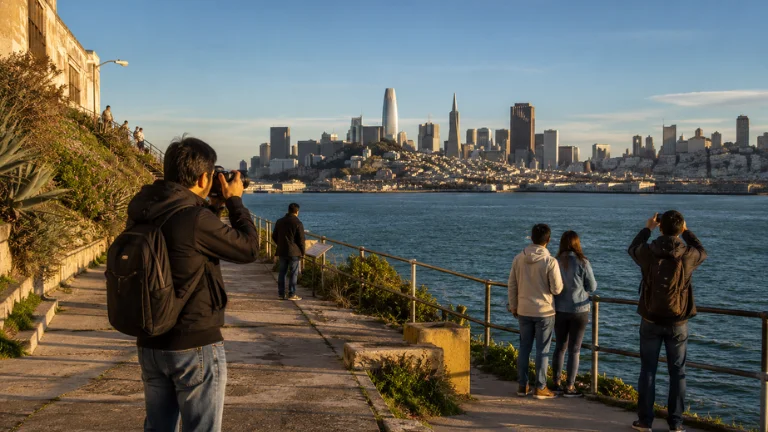
As the sun moves higher, interior contrast becomes harsher, but exterior shots improve.
From the eastern side of the island, the San Francisco skyline becomes clearer and more defined. The light begins to wrap around buildings instead of hitting them directly, which adds dimension.
Late afternoon is particularly useful if your focus is on combining foreground elements with the skyline.
Fog as a Compositional Tool
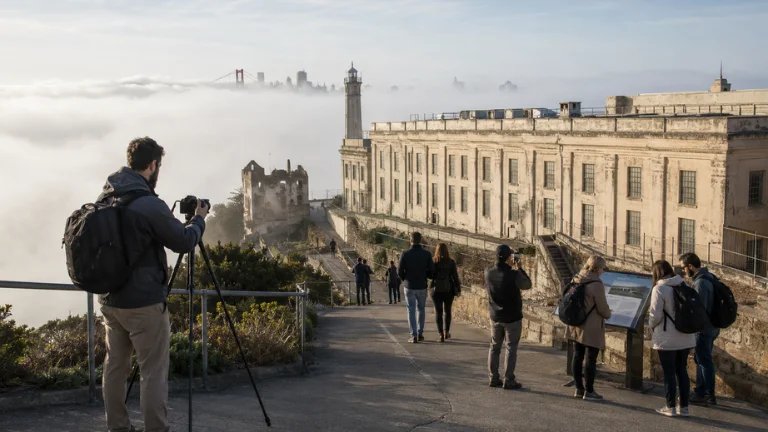
Fog is not a limitation here, it changes the type of images you can create.
Instead of shooting for clarity, fog allows you to shoot for atmosphere. Partial fog creates layers, where elements appear and disappear depending on density.
This is especially effective when:
The Golden Gate Bridge is partially visible
The skyline fades into the background
The prison remains sharply defined in the foreground
These conditions produce images that feel more dynamic than clear-sky shots.
Where to Position Yourself First
Starting Inside the Cellhouse
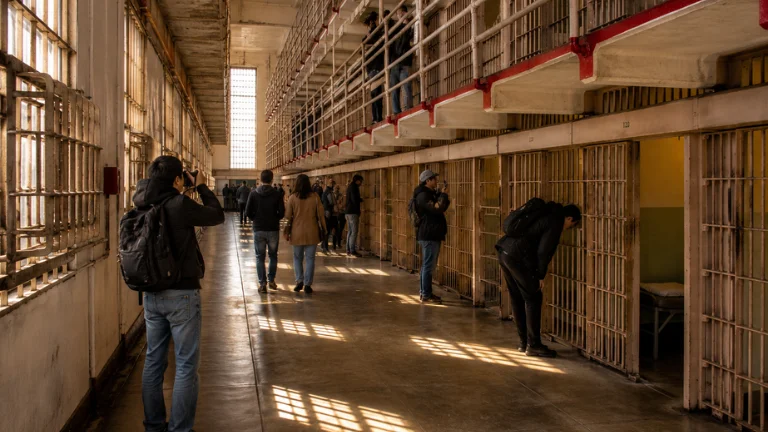
The cellhouse should be your first stop, especially if you arrive early.
The structure naturally guides composition. Corridors pull the eye forward, and repeating cell patterns create rhythm in your frame.
Positions that work best:
End of a corridor looking straight through
Upper-tier walkways looking down
Side angles that include both bars and walkway
The key is to use the structure itself instead of treating it as a static subject.
Moving Toward Exterior Viewpoints
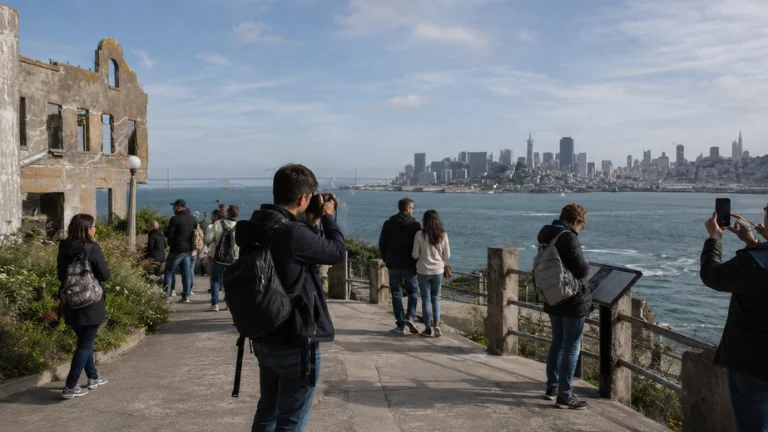
Once the cellhouse becomes crowded, move outward.
The eastern viewpoints provide direct alignment with the city. From here, you can control how much of the skyline enters your frame depending on your lens choice.
Wide shots show context. Tighter framing compresses distance and makes the skyline feel closer than it is.
Adding foreground elements improves the shot. Without them, skyline images tend to feel flat.
Moving Beyond the Main Route
Most visitors follow a predictable path: dock → cellhouse → gift shop → exit. If you stay within that flow, your photos will look similar to everyone else’s.
To get different results, you need to change position, not equipment.
Areas away from the main route give you more control over framing, fewer interruptions, and subjects that are less photographed.
The Agave Trail Changes the Visual Style
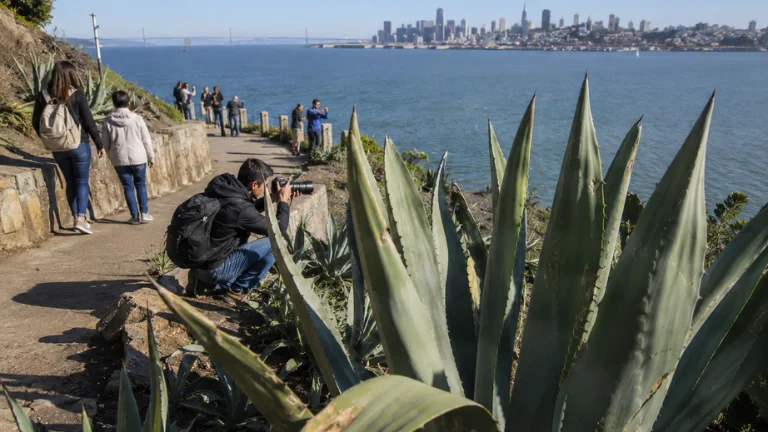
Why This Area Stands Out
The Agave Trail sits along the southern edge of the island and looks completely different from the prison environment.
Instead of concrete and metal, you get:
Large agave plants in the foreground
Open water with no structural obstruction
Lower shooting angles closer to sea level
This shift allows you to build compositions that feel more like coastal photography than prison documentation.
When and How to Use It
The trail is usually open from late September through February, depending on conditions.
Because it is less crowded, you have time to adjust positioning and wait for better light. This is one of the few places on Alcatraz where tripod use feels practical without interruption.
Use a wide-angle lens and place agave plants close to the frame to create depth.
Garden Areas Add Color Contrast
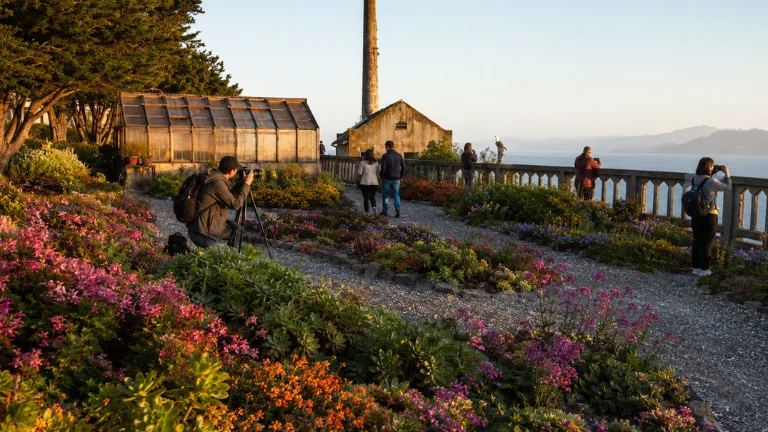
Why They Matter
Alcatraz is often associated with gray tones, concrete, steel, and weathered surfaces. The Alcatraz gardens break that pattern.
They introduce:
Natural color variation
Organic shapes against rigid structures
Seasonal changes in appearance
This contrast helps create more balanced image sets instead of repetitive monochrome shots.
Best Approach
Shoot early in the day when light is softer. Colors appear stronger, and shadows help define plant structure.
Avoid shooting these areas at midday, where flat lighting reduces texture and depth.
Exterior Edge Paths for Unique Angles
What Most Visitors Miss
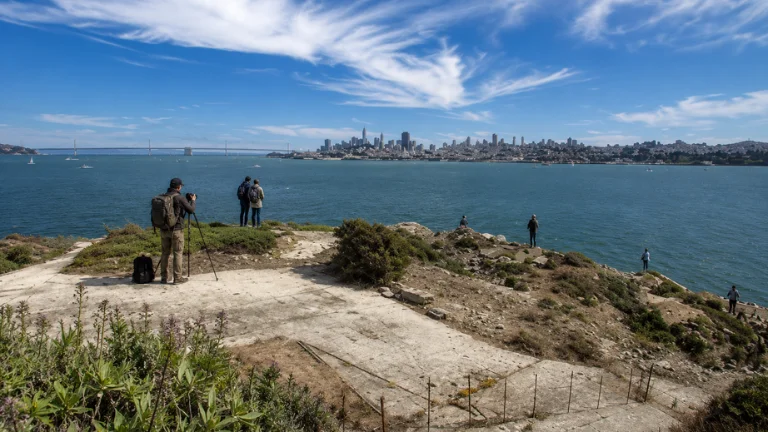
The western and northern edges of the island are rarely explored fully.
From these areas, you can photograph:
The cellhouse from below (less common perspective)
Cliff edges with layered rock textures
Open bay views without crowd interference
These angles create images that look completely different from standard tourist shots.
Why Perspective Matters
Changing your physical position changes the entire composition.
From below:
Buildings look larger
Foreground becomes more dominant
Depth increases naturally
From above:
Structure becomes clearer
Patterns are more visible
Scale is easier to understand
Using both perspectives creates variety in your final image set.
Composition That Works Specifically on Alcatraz
Using Structure Instead of Fighting It
The biggest mistake photographers make here is treating the prison as a subject instead of a compositional tool.
The structure already gives you:
Lines
Frames
Depth
You don’t need to create these, you need to align with them.
Framing the Story Inside the Frame
Alcatraz works best when you combine elements instead of isolating them.
For example:
Skyline seen through prison bars
Water visible through a doorway
Light entering through a corridor
These combinations create context, not just visuals.
Managing Movement in a Busy Environment
Crowds are unavoidable, but they can be managed.
Instead of rushing shots:
Wait for short gaps in foot traffic
Shift slightly off the main walking path
Use tighter framing to exclude distractions
Timing and patience matter more than speed here.
Early access during an Alcatraz day tour still provides the best opportunity for clean compositions.
Choosing the Right Camera Setup
DSLR and Mirrorless Approach
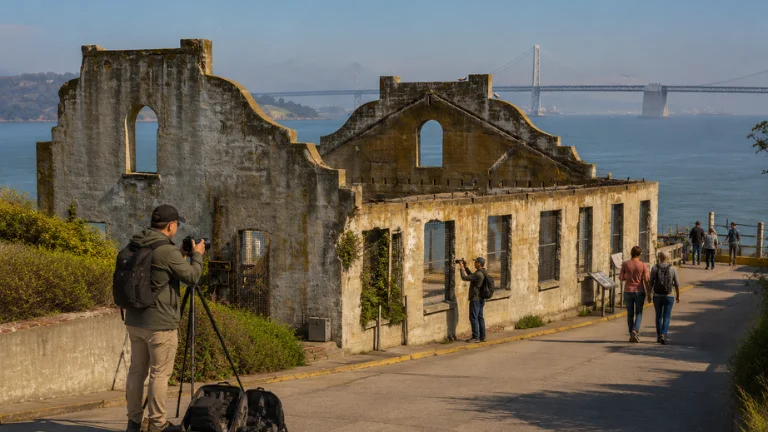
Alcatraz does not require complex gear, but the right setup improves flexibility.
A wide-angle lens in the 16–24mm range is the most useful starting point. It allows you to capture full corridors, tight interiors, and exterior landscapes without constantly changing position.
For skyline shots, a telephoto lens (70–200mm) helps compress distance. This makes San Francisco appear closer and more prominent in the frame instead of fading into the background.
A standard prime lens (35mm or 50mm) is useful for textures such as peeling paint, rusted metal, and wall details inside the cellhouse.
Shooting in RAW format is recommended. The lighting inside Alcatraz often creates strong contrast between bright windows and darker interiors, and RAW files give more flexibility to correct exposure later.
Smartphone Shooting Strategy
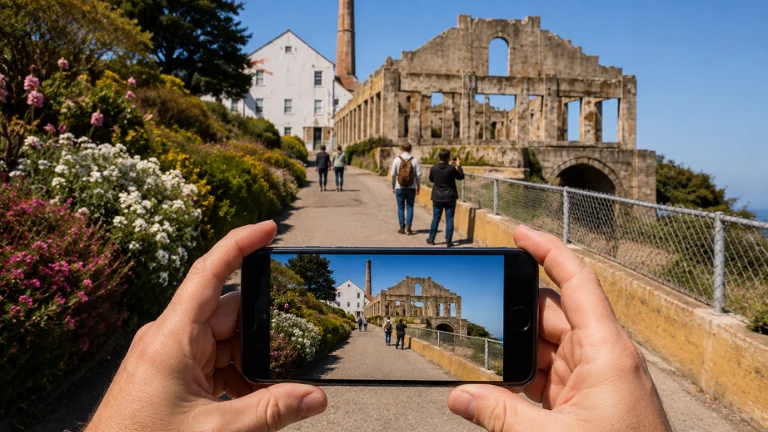
Smartphones perform well on Alcatraz if used intentionally.
Use HDR for outdoor scenes where the sky is bright and the foreground is darker. This prevents losing detail in either area.
Lowering exposure slightly helps preserve sky color, especially during midday or when shooting toward the bay.
Portrait mode works well for detail shots, particularly in gardens or close architectural elements. It separates the subject from the background and adds depth.
On the ferry, use burst mode. Movement from the boat makes single shots less reliable, while burst increases the chance of getting a sharp frame.
Planning Around Tour Type
Day Visit: Maximum Coverage
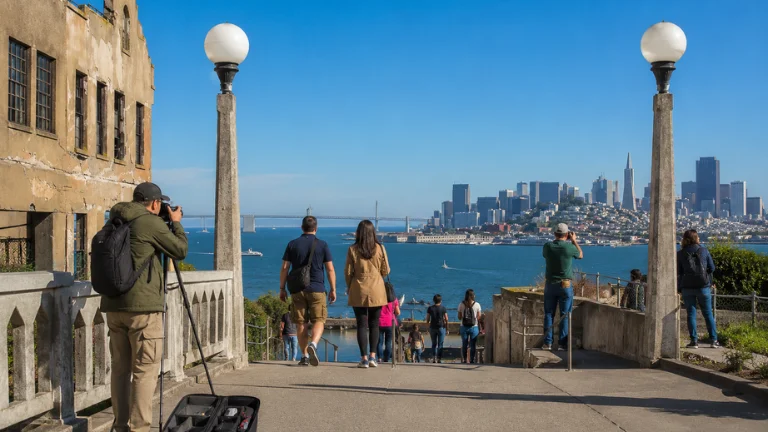
A standard Alcatraz day tour provides the most flexibility.
You have access to:
Cellhouse interiors
Exterior viewpoints
Gardens and outer paths
Lighting conditions change throughout the visit, which allows you to shoot multiple styles in one trip.
The best approach is to start inside the cellhouse early, then move outward as crowds increase.
Night Visit: Atmosphere Over Coverage
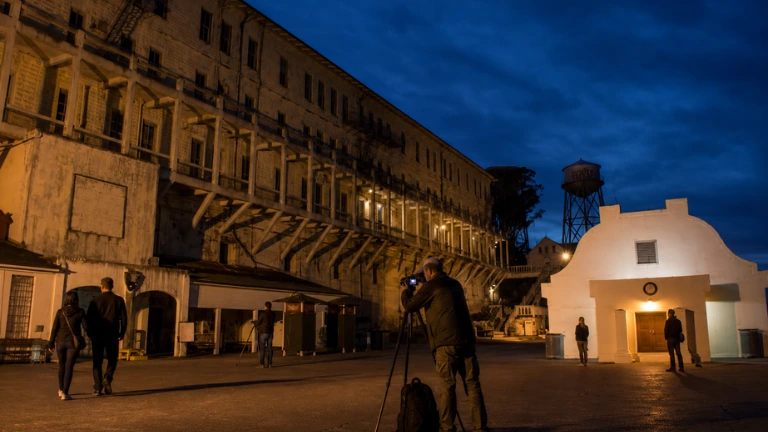
The Alcatraz night tour changes how the island looks and feels.
Artificial lighting inside the cellhouse creates deeper shadows and higher contrast. This makes images more dramatic but also more challenging.
Outside, the city lights reflect on the bay, creating compositions that are not possible during the day.
To adapt:
Increase ISO (800–3200 depending on camera)
Use a tripod for stability
Focus on mood rather than detail
The smaller group size also helps reduce distractions in your frame.
Common Mistakes That Reduce Photo Quality
Treating Every Shot the Same
Alcatraz requires different approaches for interiors and exteriors.
Using the same settings and style for both leads to flat results. Adjust based on light, subject, and distance.
Ignoring Light Direction
Light direction matters more than intensity.
Front lighting flattens texture, while side lighting adds depth. Inside the cellhouse, position yourself so light moves across the scene rather than directly into it.
Staying at Eye Level
Most photos are taken from standing height, which limits variation.
Changing your angle, even slightly, creates more dynamic results. Shooting lower emphasizes depth, while higher positions reveal structure.
Relying on Flash Indoors
Flash removes natural shadows and reduces contrast.
The cellhouse is visually strong because of its lighting conditions. Using flash cancels that effect and makes images look artificial.
Pre-Visit Preparation That Makes a Difference
A small amount of preparation improves results significantly.
Charge all devices fully before departure
Carry a power bank for longer visits
Clean lenses to avoid fog or smudges
Check weather (fog vs clear conditions changes strategy)
Choose gear based on your shooting plan
Arriving prepared saves time and allows you to focus on composition instead of adjustments.
Final Perspective
Alcatraz is not difficult to photograph, but it is easy to photograph poorly.
The difference comes from awareness, understanding where to stand, when to shoot, and how to use what is already there.
An early Alcatraz day tour gives you control and flexibility. A night tour offers a completely different visual environment focused on atmosphere.
Both can produce strong results, but only if you approach them with intent rather than just reacting to what you see.
Frequently Asked Questions
What’s the first place I should photograph on Alcatraz Island?▾
Is early morning really better for photography on Alcatraz?▾
When should I focus on skyline photos of San Francisco?▾
How can I use fog to improve my photos?▾
Where can I take less crowded photos on Alcatraz?▾
What’s the best way to compose shots inside the cellhouse?▾
Should I bring a DSLR or is a phone enough?▾
Do I need different camera settings for indoors and outdoors?▾
Is the night tour good for photography or too dark?▾
What’s the biggest mistake photographers make on Alcatraz?▾
Adrian Davis
Published on Alcatraz Island Guide


