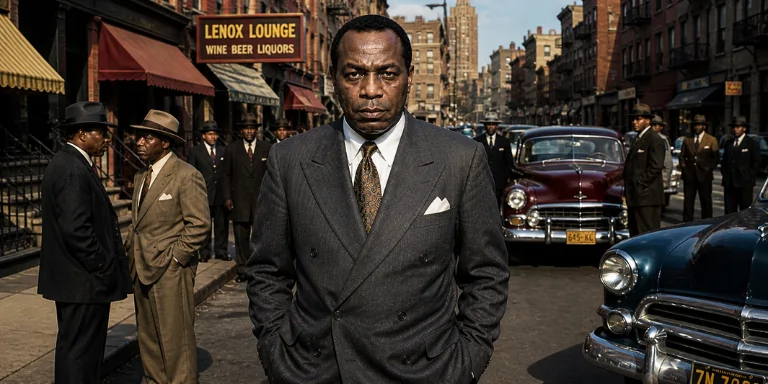
Life of Bumpy Johnson: How He Built Control Over Harlem’s Underworld
Ellsworth “Bumpy” Johnson didn’t become powerful by accident. His rise followed a clear pattern: survive early pressure, learn systems, build alliances, and remove threats when necessary.
If you look at his life closely, it reads less like chaos and more like a step-by-step takeover of Harlem’s underground economy. Understanding those steps helps explain why he stayed in control for decades.
Early Life: Why Harlem Shaped Him

Moving North Was About Survival, Not Opportunity
Johnson was born in 1905 in Charleston, South Carolina. His life shifted early when his family faced a serious threat after his brother was accused of killing a white man. In that time period, accusations alone could trigger violent retaliation.
To avoid that risk, his family sent him to Harlem while he was still a child.
This move didn’t place him in a stable environment. Harlem was growing, but it was also competitive, crowded, and controlled by informal systems where strength mattered more than background.
Early Lessons: Respect Is Earned, Not Given
When Johnson arrived, he stood out for the wrong reasons. His appearance and accent made him an easy target, and he was bullied regularly.
That phase didn’t last long.
Instead of trying to adapt socially, he adapted physically. He fought back, repeatedly, until people stopped testing him. That shift is important because it set the foundation for how he handled conflict later in life.
He didn’t avoid pressure. He confronted it directly and made sure the result was remembered.
Entry Into Crime: Understanding the System First
Small Work Didn’t Lead Anywhere
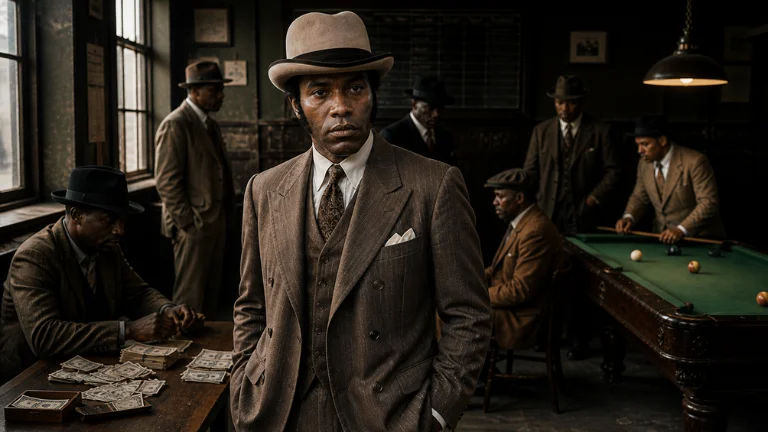
Like many young men in Harlem at the time, Johnson started with basic jobs. He sold newspapers, did small cleaning work, and spent time in pool halls where money could be made informally.
These jobs kept him moving but didn’t offer growth.
What they did offer was visibility into how Harlem actually functioned. The real money wasn’t in official work. It was in the underground economy, especially the numbers racket.
First Real Opportunity Inside Organized Crime
Johnson’s entry point came through connections with local operators who needed protection and enforcement. He started as a bodyguard, which gave him access to the internal workings of illegal businesses.
This stage is where he learned:
How money was collected daily
How disputes were handled
How authority was maintained without constant police involvement
This wasn’t random exposure. It was a direct view into a working system.
Transition Into Enforcement Roles
Once he understood the structure, Johnson moved into more active roles. He became someone who was sent to resolve problems, especially when those problems involved money or defiance.
His responsibilities expanded into areas like robbery and extortion, but what defined him wasn’t the activity itself. It was how consistently he delivered results.
People began to associate his involvement with final outcomes. That reputation reduced resistance before it even started.
Prison Phase: Where Strategy Replaced Instinct
Repeated Arrests Didn’t End His Progress
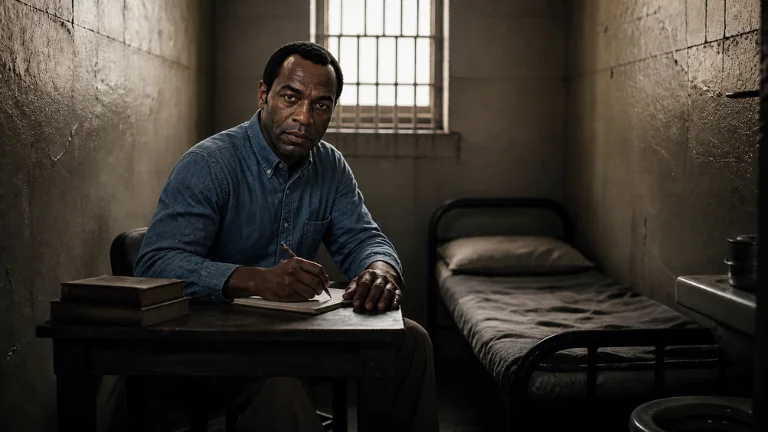
Johnson’s growing involvement in crime led to repeated prison sentences. By his early thirties, he had already spent a large portion of his life incarcerated.
For many, this would break momentum. In Johnson’s case, it reshaped it.
Developing a Different Kind of Advantage
While in prison, Johnson focused heavily on reading and writing. He studied literature and began writing poetry, some of which gained recognition beyond prison walls.
This is a key detail because it explains how he later operated with more control than most.
He didn’t rely only on reaction. He developed the ability to think through situations, anticipate responses, and act with timing.
The Impact of Long-Term Isolation
His prison time included severe punishment periods, including years in solitary confinement.
That experience reduced impulsive behavior and increased emotional control. When he returned to Harlem, he was less reactive and more deliberate.
This shift from instinct to strategy is one of the main reasons he was able to move beyond lower-level roles.
Partnership with Stephanie St. Clair
The Most Important Career Move He Made
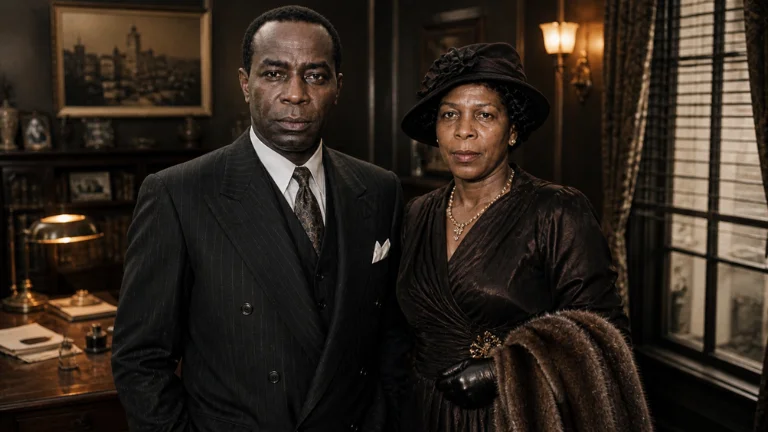
After his release in 1932, Johnson didn’t rebuild from scratch alone. He aligned with Stephanie St. Clair, who controlled a large portion of Harlem’s numbers business.
This partnership changed everything.
St. Clair needed enforcement and operational support. Johnson needed access to an established system. The match was direct and effective.
How This Partnership Created Structure
Johnson didn’t just work for her. He became central to operations.
He handled:
Protection of business interests
Collection enforcement
Response to external threats
At the same time, he learned how a large-scale illegal operation was managed daily.
This stage gave him both authority and experience.
Conflict With Dutch Schultz
Why Harlem Became a Target
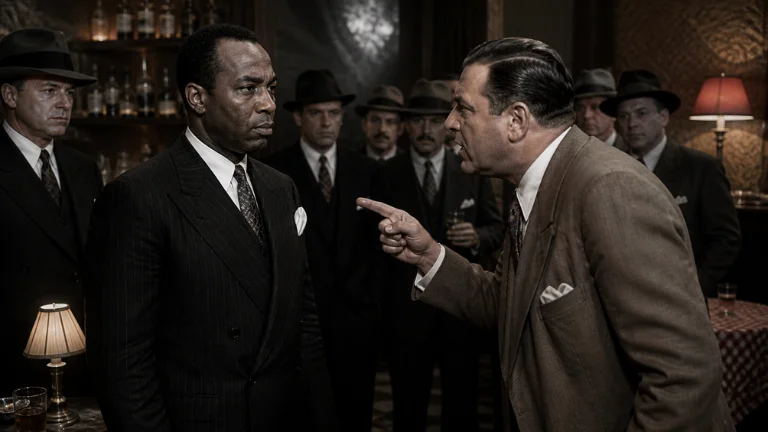
As the numbers business grew, it attracted attention from outside crime groups. Dutch Schultz saw Harlem as an opportunity to expand his influence and revenue.
He didn’t attempt slow entry. He pushed aggressively.
That created direct conflict with the existing system run by St. Clair and enforced by Johnson.
A Sustained and Organized War
This wasn’t a short-term dispute. It turned into a prolonged conflict involving targeted violence and repeated retaliation.
Johnson led operations designed to weaken Schultz’s control attempts. These actions weren’t random. They were planned responses meant to protect territory and maintain authority.
Over time, the conflict resulted in dozens of deaths and widespread instability in Harlem.
The Mafia Deal: Why Johnson Chose Alignment Over Conflict
What Changed After Dutch Schultz Was Removed
The Harlem conflict didn’t end through negotiation between local rivals. It ended because the larger Mafia network intervened.
Lucky Luciano ordered the assassination of Schultz, removing the biggest external threat to Harlem’s existing system.
At this point, Johnson faced a critical decision. Continue operating independently and risk becoming the next target, or align with a more powerful structure.
He chose alignment, but on controlled terms.
The Structure of the Agreement
Johnson negotiated a deal that allowed him to retain operational control of Harlem while sharing profits with the Mafia.
This arrangement worked because it created balance:
The Mafia gained consistent revenue without constant conflict
Johnson avoided large-scale war and secured long-term stability
Harlem remained locally controlled instead of being taken over completely
This wasn’t a compromise made out of weakness. It was a strategic move that protected his position.
Establishing Full Control Over Harlem
Transition Into Central Authority
After Stephanie St. Clair stepped back from active operations, Johnson moved into full leadership.
From that point forward, Harlem’s underground economy became centralized under his control.
This included:
Gambling operations
Protection systems
Street-level enforcement networks
What made this effective wasn’t just authority. It was consistency.
How His Control System Worked in Practice
Johnson’s system was built on predictability.
People operating in Harlem understood three things clearly:
Permission was required to run operations
Disruption would be addressed immediately
Enforcement would be decisive, not repeated
Because of this, most conflicts were prevented before they escalated. The reputation of enforcement reduced the need for constant violence.
This is one of the main reasons his control lasted as long as it did.
Public Image vs Operational Reality
Why He Didn’t Fit the Typical Crime Boss Image
Johnson didn’t present himself as a street-level enforcer, even though that’s how he started.
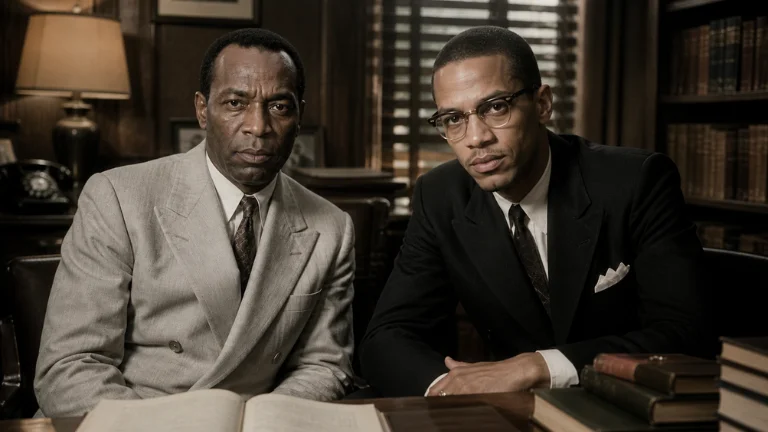
He dressed sharply, spoke with control, and carried himself in a way that signaled authority without needing to prove it constantly.
He also maintained an interest in reading and writing, which separated him from others operating in similar roles.
This mattered because perception influences behavior. People were less likely to challenge someone who appeared disciplined and calculated.
Relationship With Malcolm X
Johnson’s connection with Malcolm X highlights how his influence extended beyond crime.
They had known each other for years, and at one point Malcolm X sought protection during a period of heightened risk.
Johnson had the capacity to provide that protection, but Malcolm X eventually distanced himself due to the differences in their paths.
This interaction reflects the overlap between Harlem’s political, cultural, and underground networks during that period.
Alcatraz and the Impact of Absence
The 1951 Sentence and Removal From Harlem
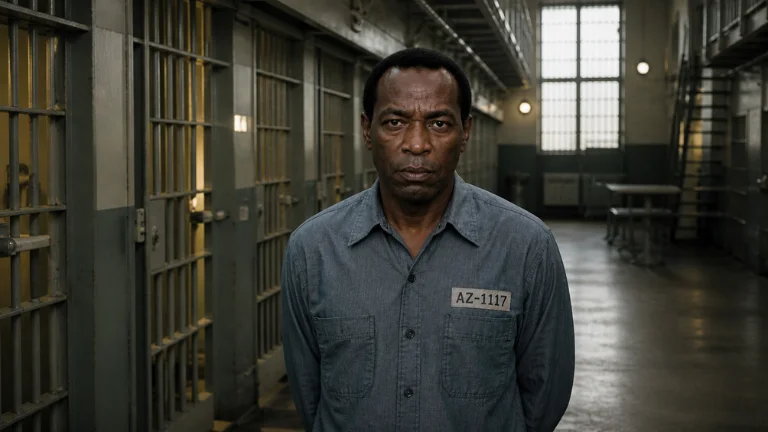
By 1951, federal authorities had built a case against Bumpy Johnson tied to narcotics activity, leading to a long prison sentence. Instead of being placed in a regular federal prison, he was transferred to Alcatraz Federal Penitentiary, where inmates were selected specifically because they were considered difficult to manage elsewhere. Inside that system, he became inmate AZ-1117, one of many names reduced to a controlled identity.
Daily life at Alcatraz followed a pattern that left little room for influence. Movement happened on schedule, conversations were limited, and most hours were spent inside narrow cells. The design of the prison focused less on punishment through violence and more on restriction through routine, cutting off outside communication and minimizing internal organization among inmates.
The effect of this wasn’t immediate in Harlem, but it was steady. Johnson’s authority had always depended on presence and response, and without both, decisions stopped flowing through a single point. Over time, that absence created space for others to act without waiting for direction.
Presence During the 1962 Escape Event
In 1962, Alcatraz drew attention after the escape involving Frank Morris and the Anglin brothers. The plan didn’t rely on force but on patience, with small changes made over time inside their cells, eventually allowing them to move undetected past routine inspections.
They left the prison using a handmade raft and disappeared into the bay, with no confirmed outcome. The case became widely discussed not because escapes were common, but because this one exposed how even a tightly controlled system could be tested over time.
Johnson was part of the same environment when this happened, which has led to assumptions about possible awareness. There is no evidence connecting him to the escape itself, and in practical terms, his situation remained unchanged. The larger relevance lies in timing, as events like this unfolded while his position in Harlem continued to weaken without direct involvement.
Return to Harlem: Why His Influence Declined
A Different Environment Than the One He Left
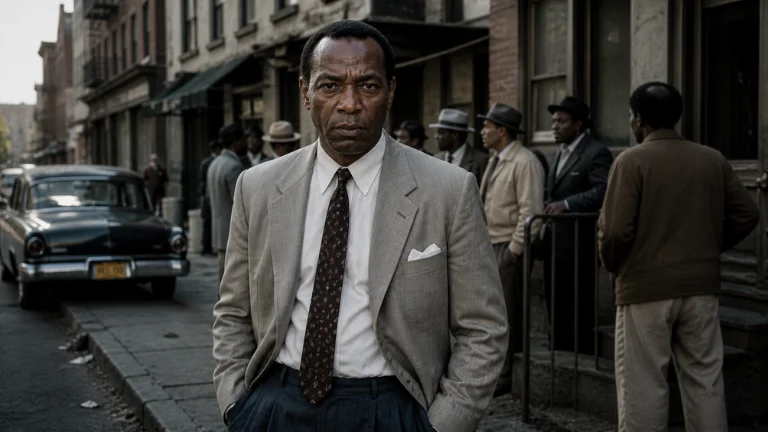
When Johnson was released in 1963, he returned to a Harlem that no longer operated the way it had before.
Several changes had taken place:
Increased drug activity
Less centralized control
Emergence of new players without direct ties to his system
His reputation remained strong, but the structure that supported his authority had weakened.
Limits of Reputation Without System Control
Johnson still commanded respect, but respect alone isn’t enough to maintain full control.
His earlier dominance depended on:
Active enforcement networks
Continuous presence
Strong internal structure
Without those elements functioning at the same level, his influence naturally declined.
Final Years and Direct Confrontation With Authority
The 1965 Police Station Incident
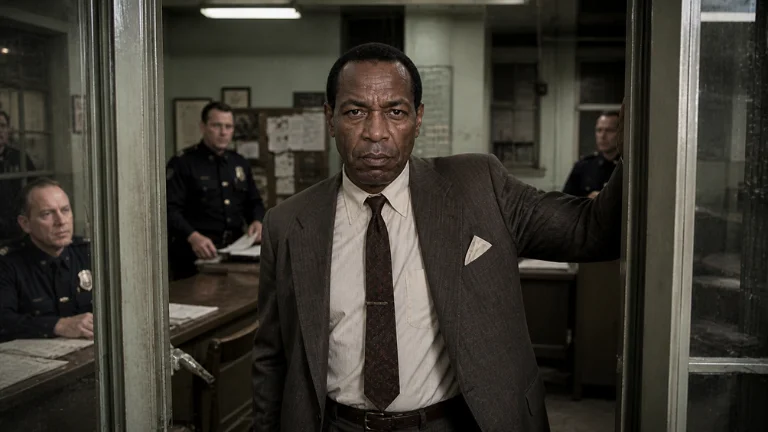
One of the most unusual moments in Johnson’s later life came in 1965 when he walked into a police station and refused to leave.
This wasn’t impulsive. It was a response to ongoing police pressure and surveillance.
He was arrested but later acquitted.
The incident shows that even in his later years, he didn’t avoid confrontation. He addressed it directly, even when the opponent was law enforcement rather than rival operators.
A Quiet End in a Public Space
In 1968, Johnson died of a heart attack while sitting in a Harlem restaurant.
After decades of operating in high-risk environments, his death came without violence.
What His Funeral Revealed
His funeral drew a large and mixed crowd, including community members, associates, and a strong police presence.
This reflected two realities:
He was respected by many in Harlem
He was closely monitored and feared by authorities
That combination defined his position throughout his life.
Timeline of Ellsworth “Bumpy” Johnson
1905 – Born in Charleston
Early 1910s – Sent to Harlem for safety after family threats
1920s – Gets involved in street hustles and enters organized crime as a bodyguard
Late 1920s–1930s – Builds reputation as an enforcer; multiple arrests and prison time shape his mindset
1932 – Partners with Stephanie St. Clair, gaining structure and influence
1930s (mid–late) – Leads conflict against Dutch Schultz during Harlem gang wars
Late 1930s – Aligns with Lucky Luciano, securing long-term control over Harlem
1940s – Becomes the dominant underworld figure, known as the “Godfather of Harlem”
1951 – Convicted on federal charges and sent to Alcatraz Federal Penitentiary (Inmate AZ-1117)
1962 – Present at Alcatraz during the famous escape of Frank Morris and the Anglin brothers
1963 – Released from prison; returns to a changed Harlem with reduced centralized control
1965 – Stages a protest inside a police station due to ongoing harassment
1968 – Dies of a heart attack in Harlem, marking the end of an era
Legacy: What Made His Control Last
Key Factors Behind His Long-Term Influence
Johnson’s influence lasted because of specific, repeatable factors:
He understood systems, not just actions
He maintained consistent enforcement
He aligned with larger power structures when necessary
He adapted from instinct-driven behavior to strategic control
These elements allowed him to operate at a higher level than many of his contemporaries.
Why His Story Still Matters
Bumpy Johnson’s story continues to be relevant because it explains how localized power structures work within larger systems.
He wasn’t the biggest crime boss in the country, but within Harlem, for a long period, he was the central authority.
That level of control, maintained across decades despite prison sentences and external pressure, is what sets him apart.
Alcatraz Today: How to Experience These Stories
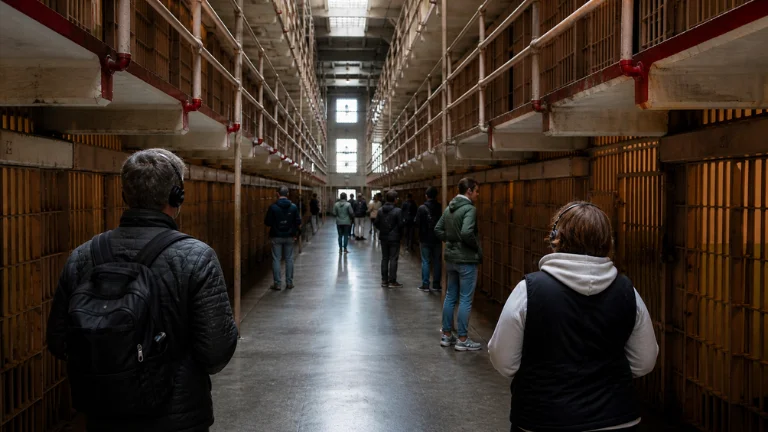
Alcatraz Island isn’t just a place to visit, it’s a place to experience the stories of inmates like Bumpy Johnson in a real, physical setting. The preserved cellhouse and corridors allow you to walk through the same spaces where these events once unfolded, making the history feel immediate rather than distant.
The Alcatraz Day Tour is the best starting point to understand these stories. Through its audio-guided narration, you hear firsthand accounts that connect individual lives to the larger system of control inside the prison, helping you visualize how everything operated.
To feel the emotional weight of those stories more deeply, the Alcatraz Night Tour offers a more immersive setting. The quieter environment and darker atmosphere make it easier to connect with the isolation and intensity that defined life on the island.
For a deeper and more detailed perspective, the Alcatraz Behind the Scenes Tour takes you beyond the standard route. It gives access to lesser-seen areas and adds context to how the prison functioned behind closed doors, making the overall experience more complete and insightful.
Final Thoughts
The Life of Bumpy Johnson is not just a story of crime, it’s a blueprint of how power is built, maintained, and eventually challenged. From the streets of Harlem to his time at Alcatraz Federal Penitentiary, Johnson showed that true control comes from understanding systems, not just using force.
What set him apart was his ability to adapt, shifting from instinct-driven actions to calculated decisions, and aligning with larger powers when necessary. Even when his influence declined, his reputation remained strong, proving that impact doesn’t disappear overnight.
In the end, Bumpy Johnson didn’t just rise within Harlem’s underworld, he defined how it operated for decades, leaving behind a legacy that still explains how real power works.
Frequently Asked Questions
Who was Bumpy Johnson and why is he famous?▾
How did Bumpy Johnson gain control over Harlem? ▾
What was Bumpy Johnson’s relationship with the Mafia? ▾
Was Bumpy Johnson connected to Malcolm X? ▾
Did Bumpy Johnson go to Alcatraz?▾
Why was Bumpy Johnson sent to Alcatraz? ▾
How long did Bumpy Johnson spend in prison?▾
Did Bumpy Johnson lose control of Harlem while in prison? ▾
How did Bumpy Johnson die?▾
What made Bumpy Johnson different from other crime bosses? ▾
Adrian Davis
Published on Alcatraz Island Guide


